
Response to Reports of Fish Die Off
Recently we have been aware of unusually large fish die-offs on the Chain. A big thank you to everyone for reaching out to us and reporting information on these die-offs. According to the DNR, it is not surprising there is more die-off this year with the extremely long stretch of hot weather we have been experiencing. And it probably won’t get better any time soon. The DNR will not send anyone out to test any dead fish and no action will be taken, as this is considered a normal phenomenon. The majority of the fish kill appears to be northern pike and catfish.
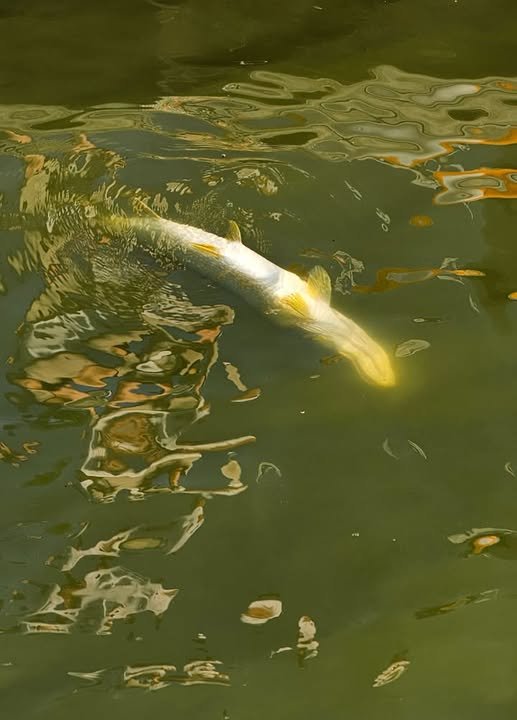
WHY IS THIS HAPPENING? Jon Folkedahl is our Water Quality lead, and he and his team collect water samples monthly for lab analysis from six of the Chain lakes, concurrently measuring dissolved oxygen (DO) and temps at eight locations. Last Wednesday, July 15, was the latest sampling event. He noted that there were a variety of DO conditions across the Chain. Water temps at one meter depth were quite consistent at 85 degrees throughout. The DO levels did vary but most of the lakes had survivable DO levels down to around 6 - 8 feet of depth. A few locations held oxygen levels above 2 ppm all the way to the bottom, even in deeper locations in excess of 30 feet. Some lakes were well stratified, with DO levels and temps falling steadily from top to bottom. Schneider Lake, for example, lost oxygen and heat rapidly and steadily with depth, falling to zero oxygen by about the 15 - 20 foot depth and temps in the 40s as the probe neared the bottom around 33 feet. The riverine lakes, however, were well mixed with respect to both temp and dissolved oxygen, top to bottom above 2 ppm dissolved oxygen. Knaus and Krays - as usual - held the most oxygen of all the Chain lakes, yet their overall depths where we sample are 5 - 6 feet.
The Chain is a super complex system and a lot of factors come into play. Northern pike can withstand more stress and lower oxygen levels than most fish in Minnesota lakes. They can tolerate long term oxygen levels as low as 2 ppm or even lower. Same with catfish. Other Minnesota game fish are less tolerant of low oxygen, such as walleye and panfish. Therefore it seems unlikely that the northern pike and catfish would be the first to die strictly due to low oxygen levels. We are guessing - and again this is just a guess - that people fishing tend to keep the walleyes and the larger panfish, while releasing the northerns and catfish. Catch and release does stress all fish, and with lake water conditions being less than optimal, some of the northerns and catfish that get released just can't recover.
WHAT CAN I DO TO HELP? There are two musky fishing leagues in Minnesota. They fish on Wednesdays and both leagues suspend operations when water temps hit 80 degrees as muskies do not fare well in hot temps and low dissolved oxygen levels, and the stress of catching them (as they are fierce battlers) and releasing is often a death sentence. This year they suspended the league the week of July 6th and do not anticipate opening the league again until mid-to-late August.
In that spirit we would like to ask the fishing community to exercise care and caution should you choose to fish while these conditions persist.
Back to the muskies; the DNR would like people to be alert for any dead muskies they see and if they have tags they would like to know the tag numbers. You can communicate that on our Facebook page, directly to the SRCLA board and/or to the DNR (joe.stewig@state.mn.us).