


TWO Volunteer Opportunities!
Two chances to make an impact!
It takes a village—and a lot of hands—to keep our local waters beautiful! We have two fantastic volunteer opportunities coming up to help keep the Sauk River and Chain of Lakes clean, beautiful, and healthy!
1. Sauk River Cleanup (Cold Spring Area)
When: Saturday, October 3 9:30AM Frogtown Park
Who: Sauk River Watershed District
What: Volunteering to pick up trash along the shores of the Sauk River in and around Cold Spring.
Sign-up: Visit StearnsCD.org/rivercleanup to register and get more details.
2. Sauk River Chain of Lakes Association Fall Clean Up
When: Saturday, October 24 10AM
Who: Sauk River Chain of Lakes Association
What: Focusing cleanup efforts on the area near the Highway 22 Landing.
Sign-up: To join this effort, please contact Earl Von Ende directly at evonende@comcast.net

Attention Boaters, Anglers, and Shoreline Residents
Two-sided cards that list the steps recreational users can take to prevent the spread of aquatic invasive species.
We all play a role in helping contain invasive species, whether you're a boater, an angler, or a shoreline resident. Here are some helpful reminders from the DNR on what you can do if you are one, two, or all three of these!
Download a PDF of the Attention Boater information.
Download a PDF of the Attention Angler information.
Download a PDF of the Attention Shoreline Resident information.


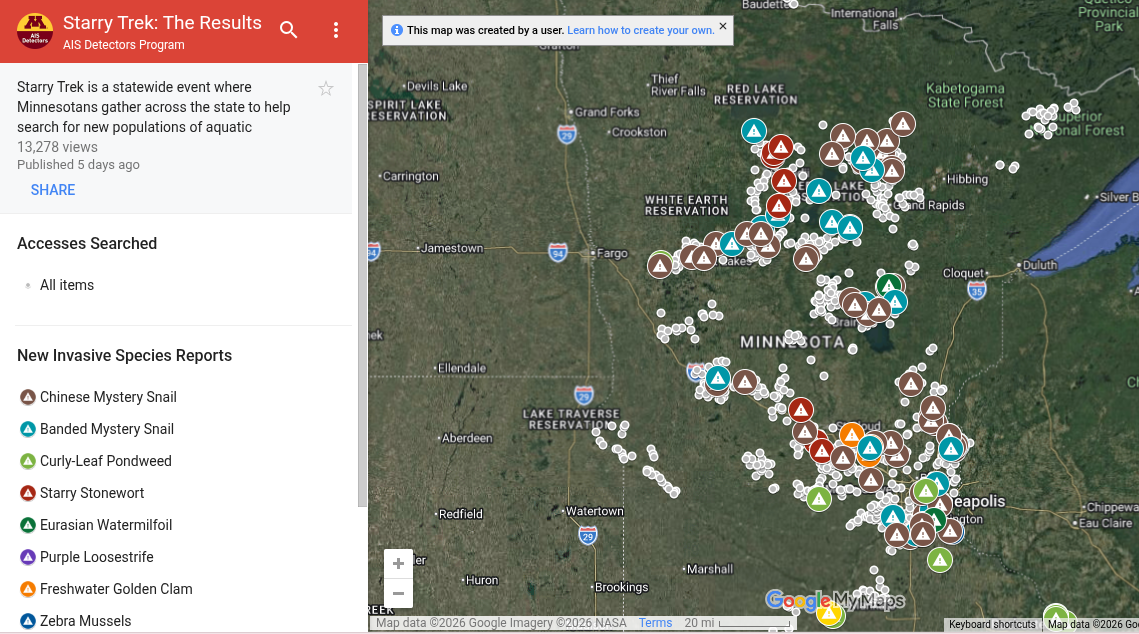
Starry Trek Results
Starry Trek Results
Thank you to the 173 volunteers who helped protect Minnesota lakes during this year's Starry Trek event. 266 public accesses were searched, and 230 water bodies were checked across Minnesota. You can view past records from 2017 to today on the Starry Trek Results Map. Save the Date! The 2027 Starry Trek event will take place on August 14th.
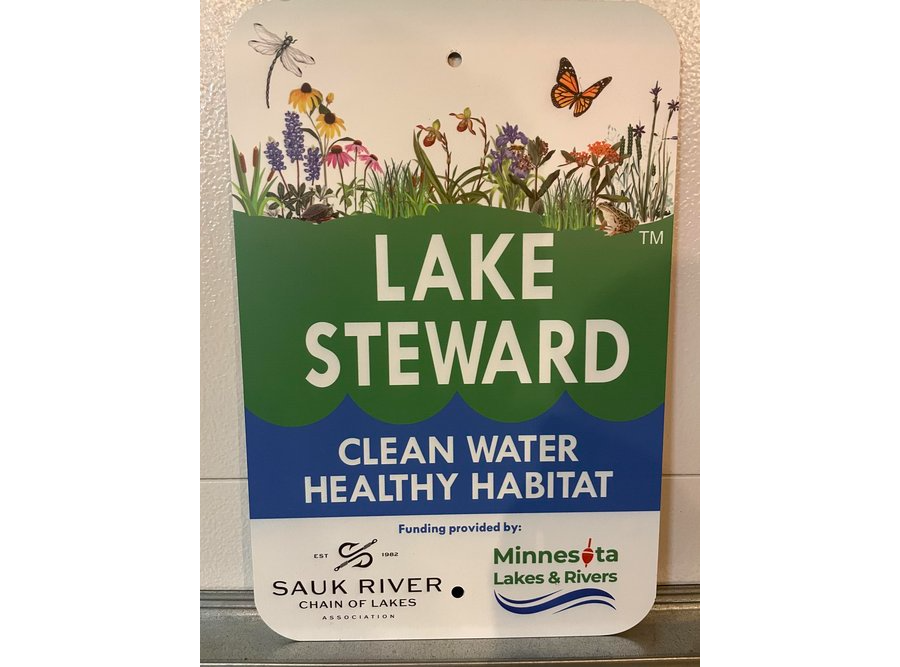
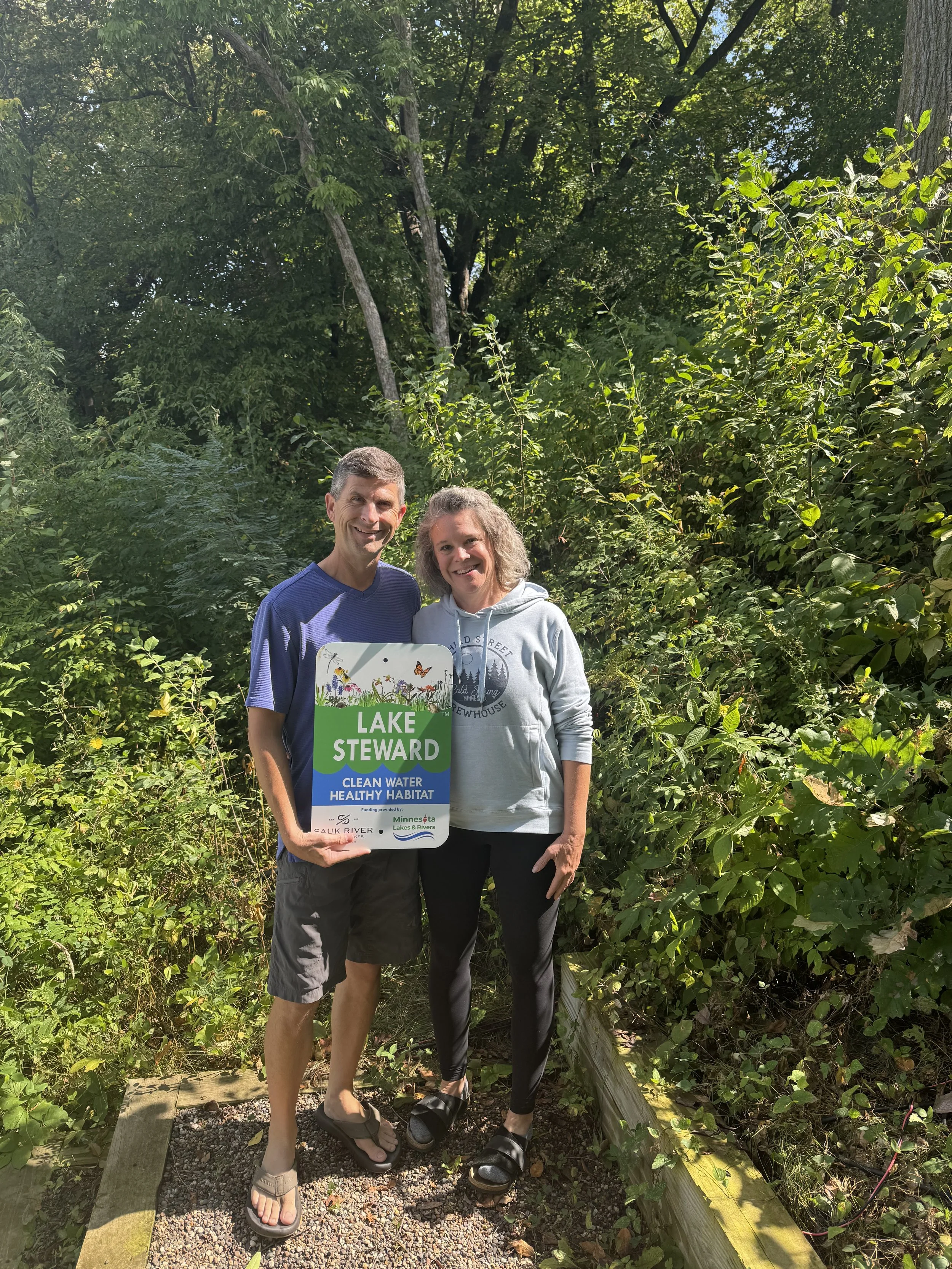
Our latest Lake Stewards!
Our latest Lake Stewards!
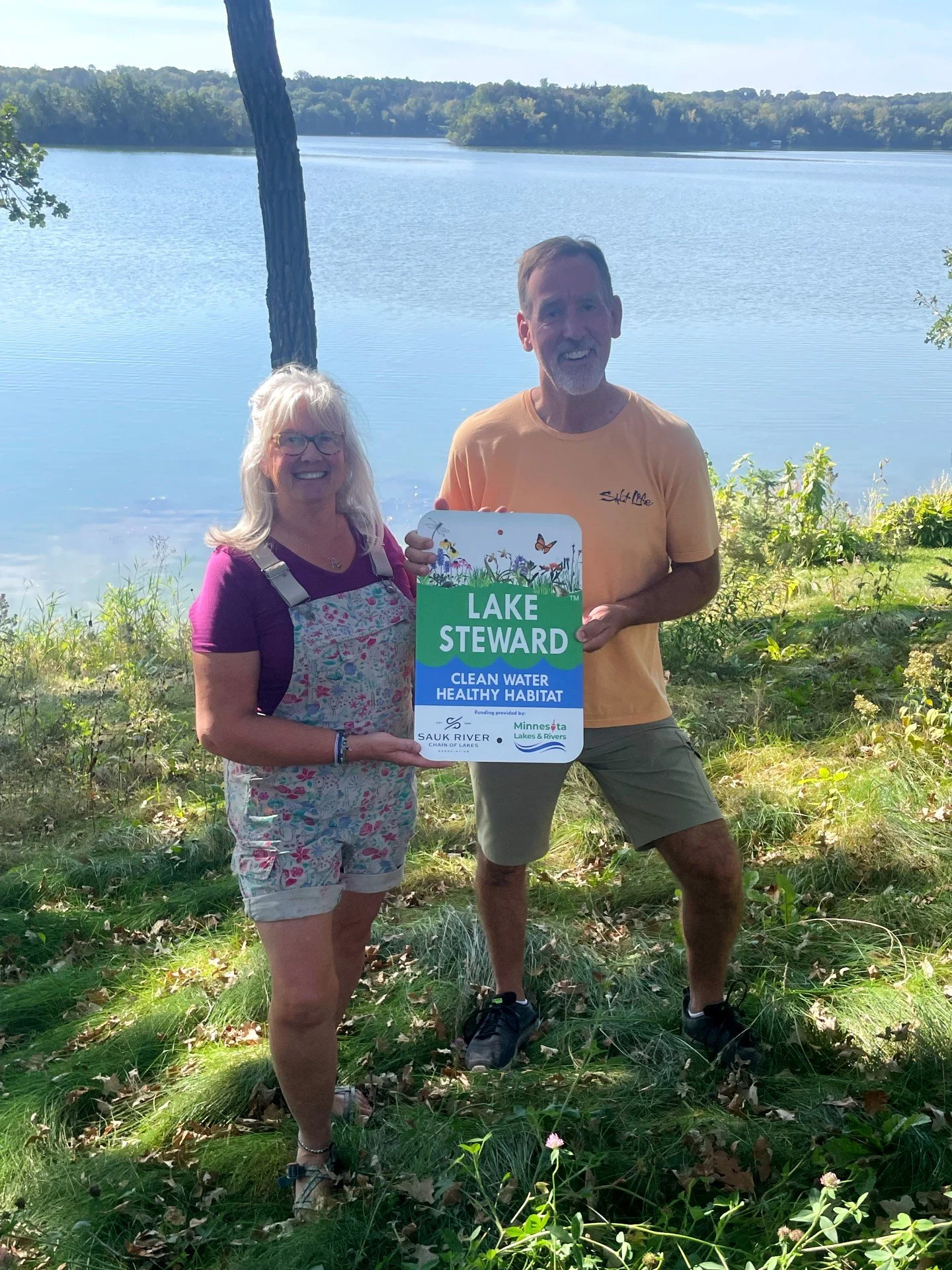
Having enjoyed a weekend cabin on Little Cedar Island Lake, Jenny and Mike Hidding recently upgraded to a full-time home on Koetter Lake. Given the robust, mature buffer zone along the shoreline, they wondered if it met the criteria for the Lake Steward program. Do you want to see if your property qualifies? Take the Quiz here! Congrats Jenny and Mike!

Educational Opportunities
SRCD Educational Opportunities
Curious about the natural world right in our backyard? Join ROCORI Community Education and the Sauk River Watershed District for three events:
Watersheds 101
Doing it Different: Habitat Help for Lawns, Shorelines & Pollinators
Smart Salting.
All are online and cost $10 each to attend. Learn more here:
https://rocori.ce.eleyo.com/search?redirected_yet=true&sf[category]=78
Throwback Thursday?
Throwback Thursday?
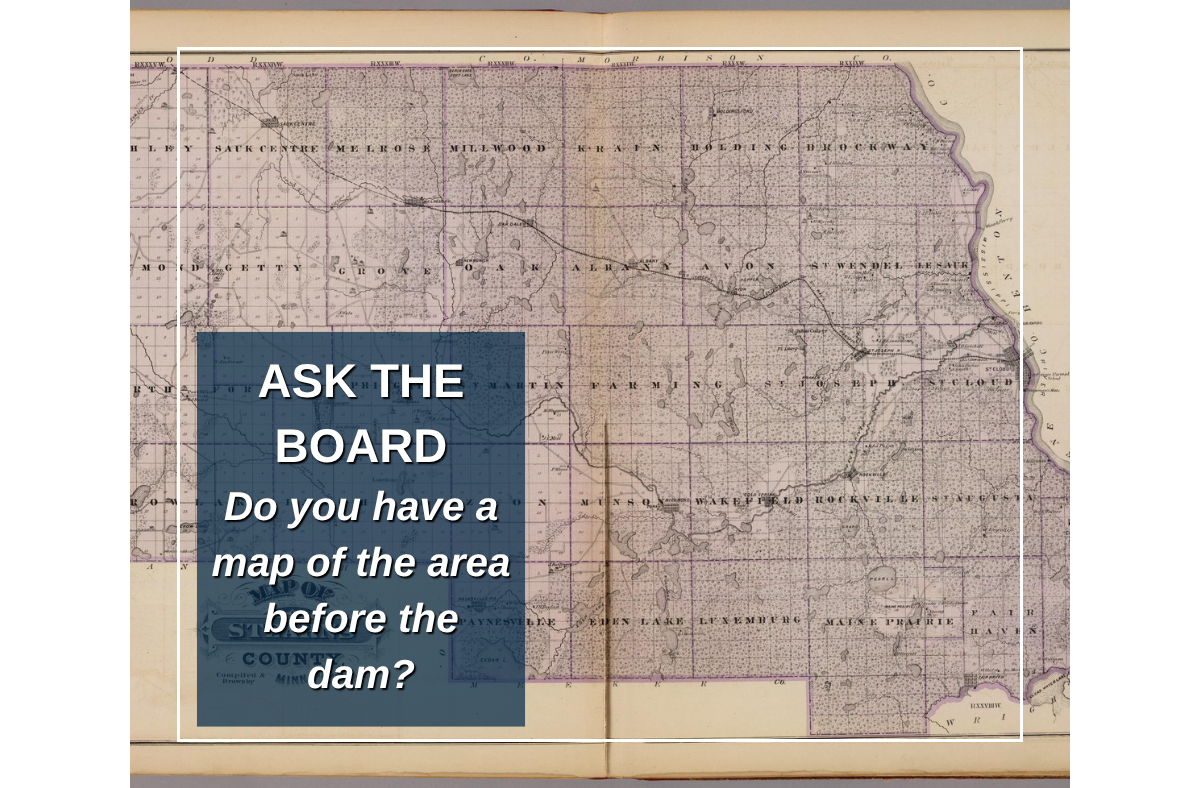
More like a trip back to the 1850s!
🕰️We recently had a request for photos or maps of the area before the dam was put in. After digging into the history books, we know the dam was implemented in 1857. This map is from an 1874 publication. It doesn't have an exact date printed on it, but you can clearly see it features the landscape before the dam was built.We’ve checked with the local Area Historical Society and the Stearns Co. Museum, but now we’re turning to you! Do you have any maps or photos from way back then? Let us know! 🗺️📸

About those Wake Zones…
Wake Zones
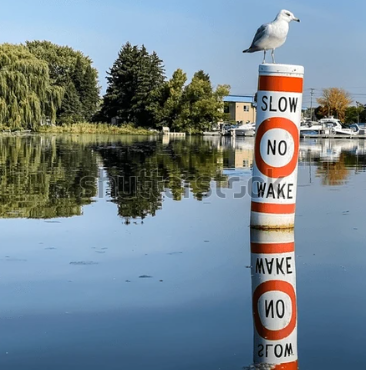
A recent comment on Facebook reminded us of a post we made last year about differences in No Wake zones across the Chain. Of the seven No Wake zones, two are in effect all year, whether buoys are in place or not. Those two zones are the channel between Little Cedar and Cedar Island Lake, as well as the section of the Sauk River between the Hwy 23 bridge in Cold Spring and the Co. Rd. 2 bridge.
For the five other No Wake zones, restrictions are only in effect between Memorial Day and Labor Day. However, in the interests of maintaining a healthy Chain, let's all slow down in those areas all year long, as wake-induced erosion doesn't stop when the buoys are absent.
Native plants, lots of patience: How a Stearns County couple restored a damaged lakeshore
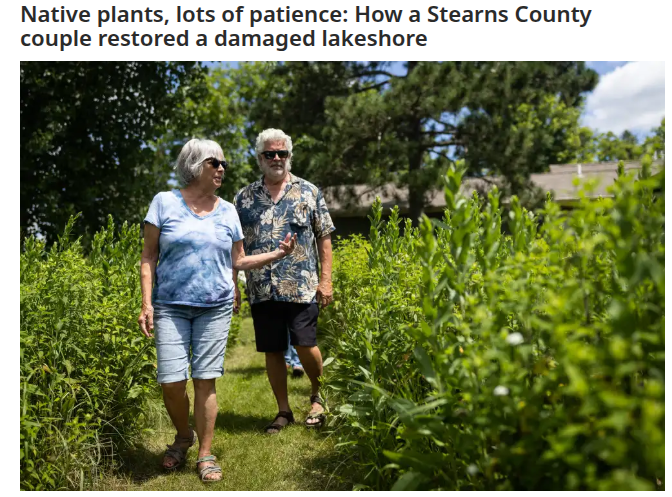
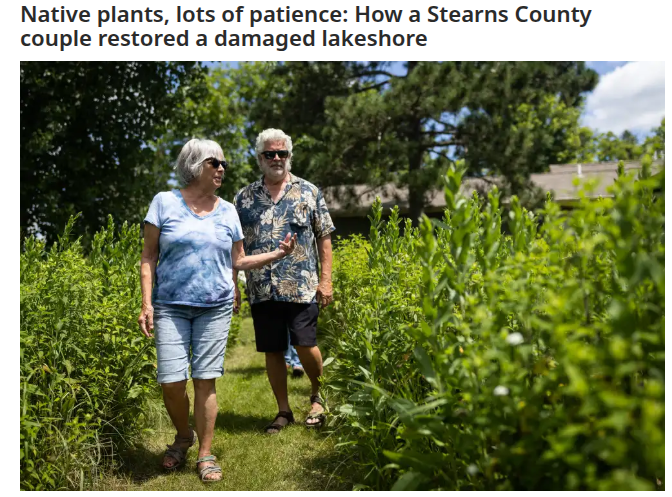
Repost of 2024 MPR article featuring a shoreline on Great Northern!
You might recognize this article from 2024. It spotlights a parcel on our very own Chain that was converted to a natural shoreline 20 years ago. Click here to access.
NEW AIS FOUND: Help us keep eyes on the Chain!
New AIS Found
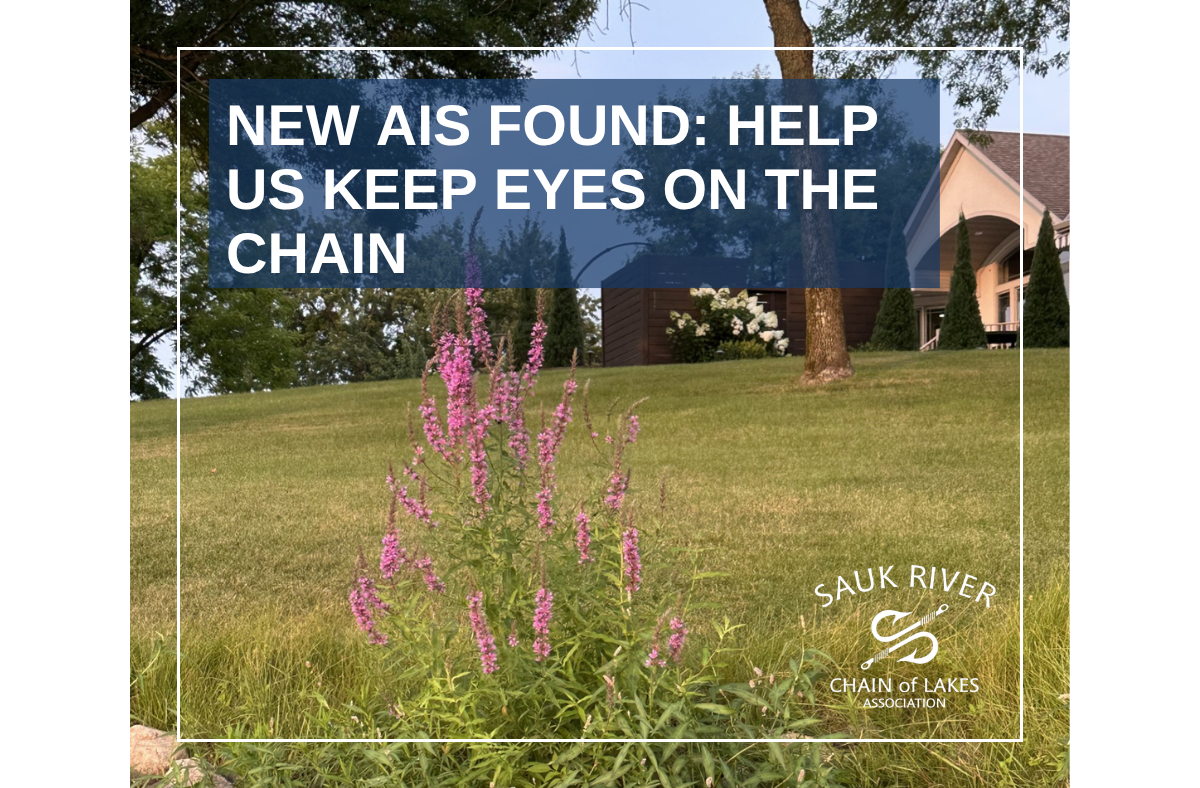
Purple loosestrife has been identified on a shoreline of the Sauk River Chain during this season’s chainwide point-intercept survey. The known occurrence is limited, making early detection and rapid response especially important. We’re asking shoreline property owners to be on the lookout: check your shoreline, keep an eye on neighboring properties, and know what to look for as you’re out around the Chain.
Prevention and Early Detection and Rapid Response (EDRR) are some of our best strategies for keeping a new invasive species finding from becoming a larger management challenge.
👉 Read our new article to learn how to identify purple loosestrife and what to do if you find it. Contact any member of the AIS Team on the Board if you have questions.
Know the plant. Keep watch. Help us keep eyes on the Chain.
Stay connected!
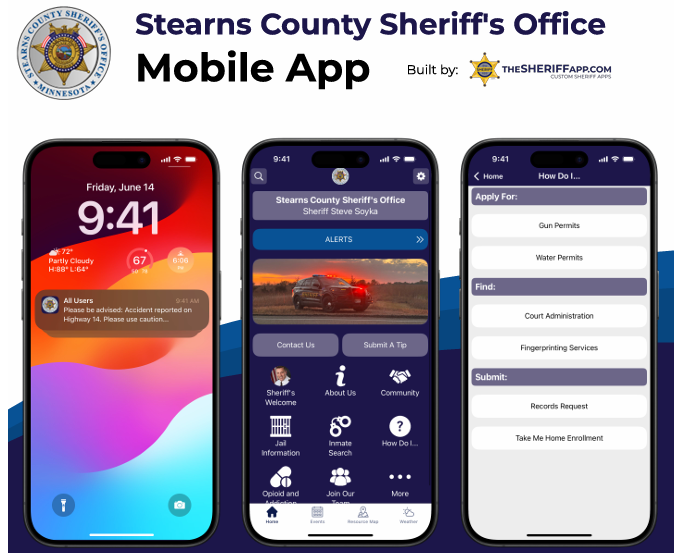
Stay connected and informed with the Sheriff’s Office!
The Stearns County new community notification system is to keep you updated on critical safety alerts, road closures, and department news.This system is also your direct line for boating and water safety updates. By signing up, you will receive immediate no-wake alerts during high-water events so you can navigate our waterways safely. Fortunately, high water has not been an issue so far in 2026, but being prepared ensures we stay safe whenever conditions change. Detailed news release here.


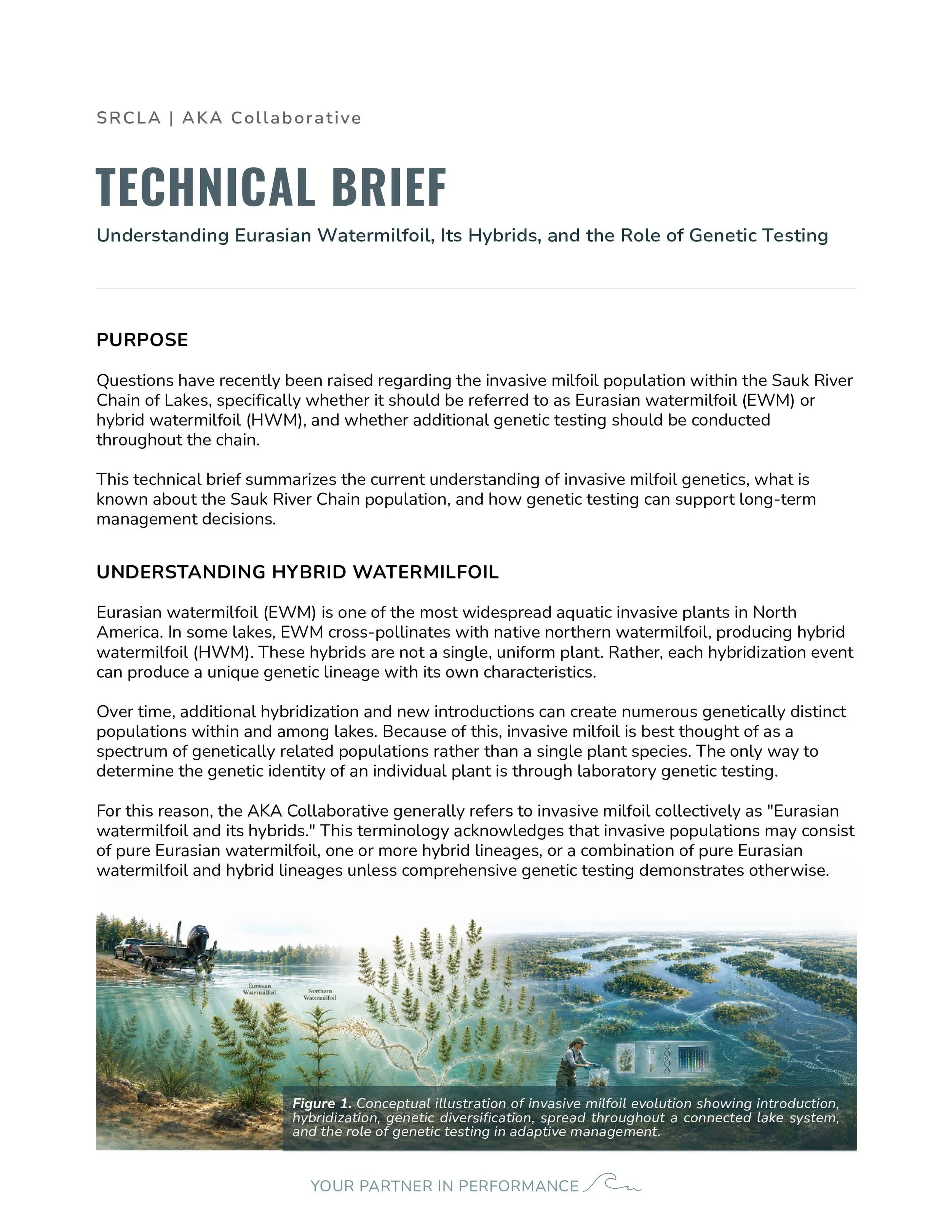
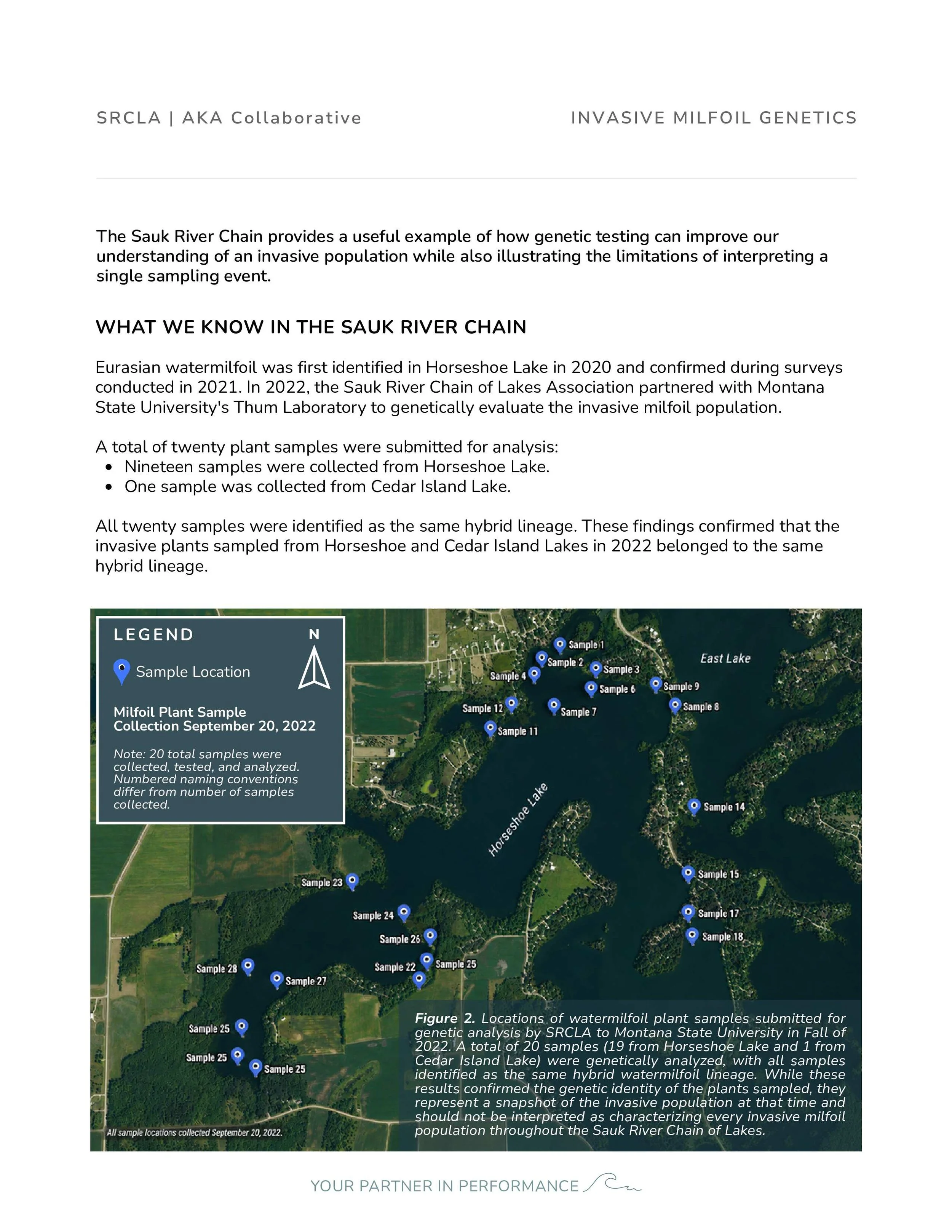
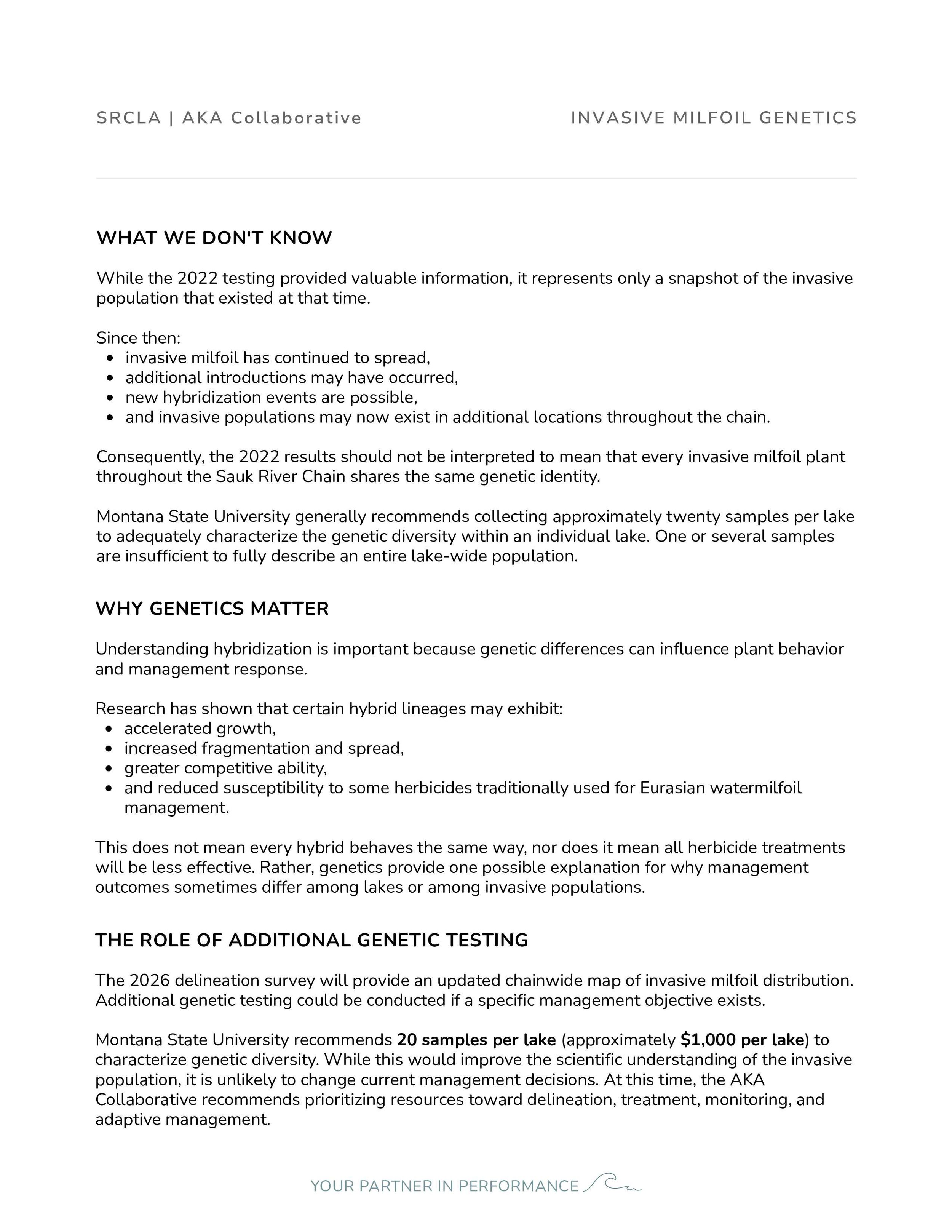
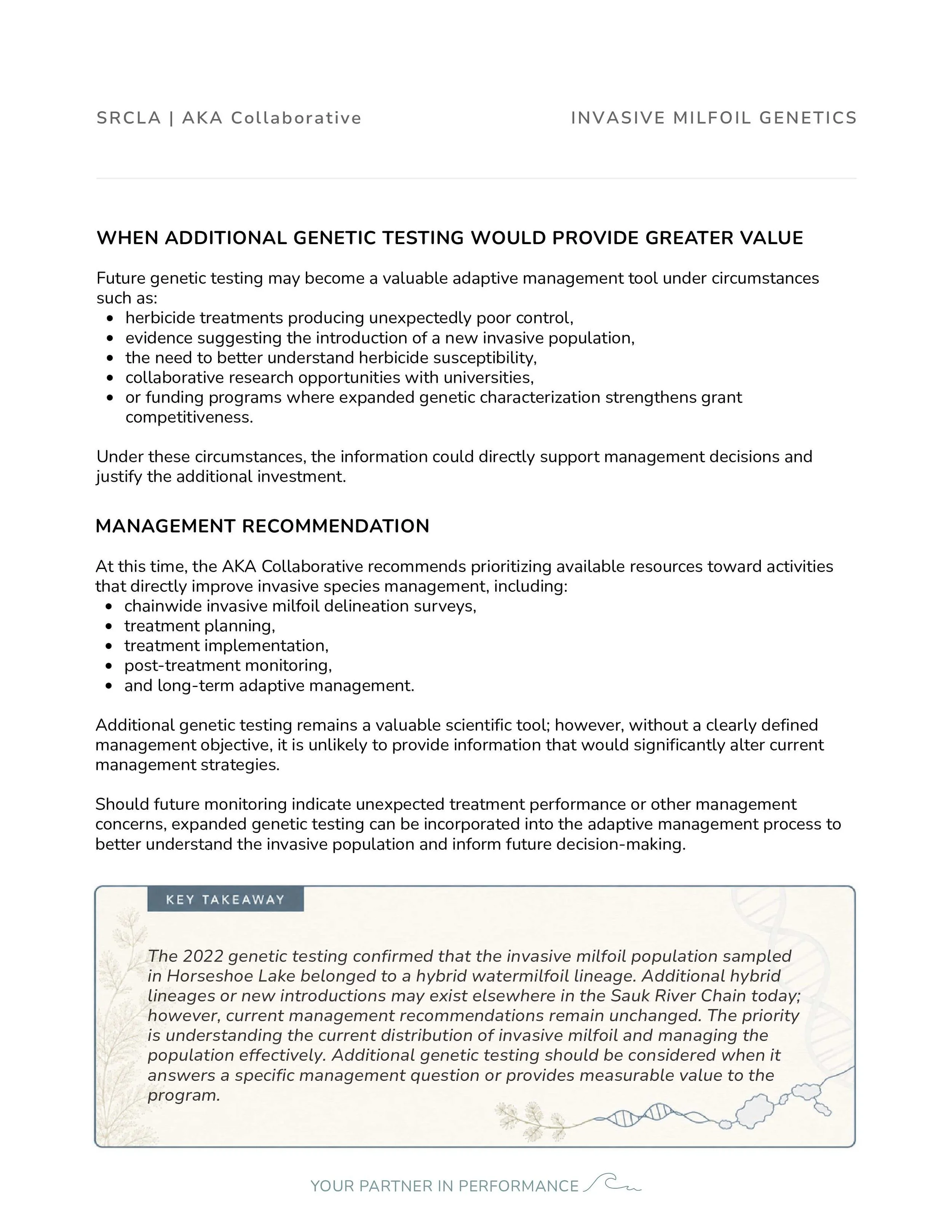
Technical Brief: Understanding Eurasian Watermilfoil, Its Hybrids, and the Role of Genetic Testing
Technical Brief
Make it stand out
Whatever it is, the way you tell your story online can make all the difference.
Make it stand out
Whatever it is, the way you tell your story online can make all the difference.
Make it stand out
Whatever it is, the way you tell your story online can make all the difference.
Make it stand out
Whatever it is, the way you tell your story online can make all the difference.
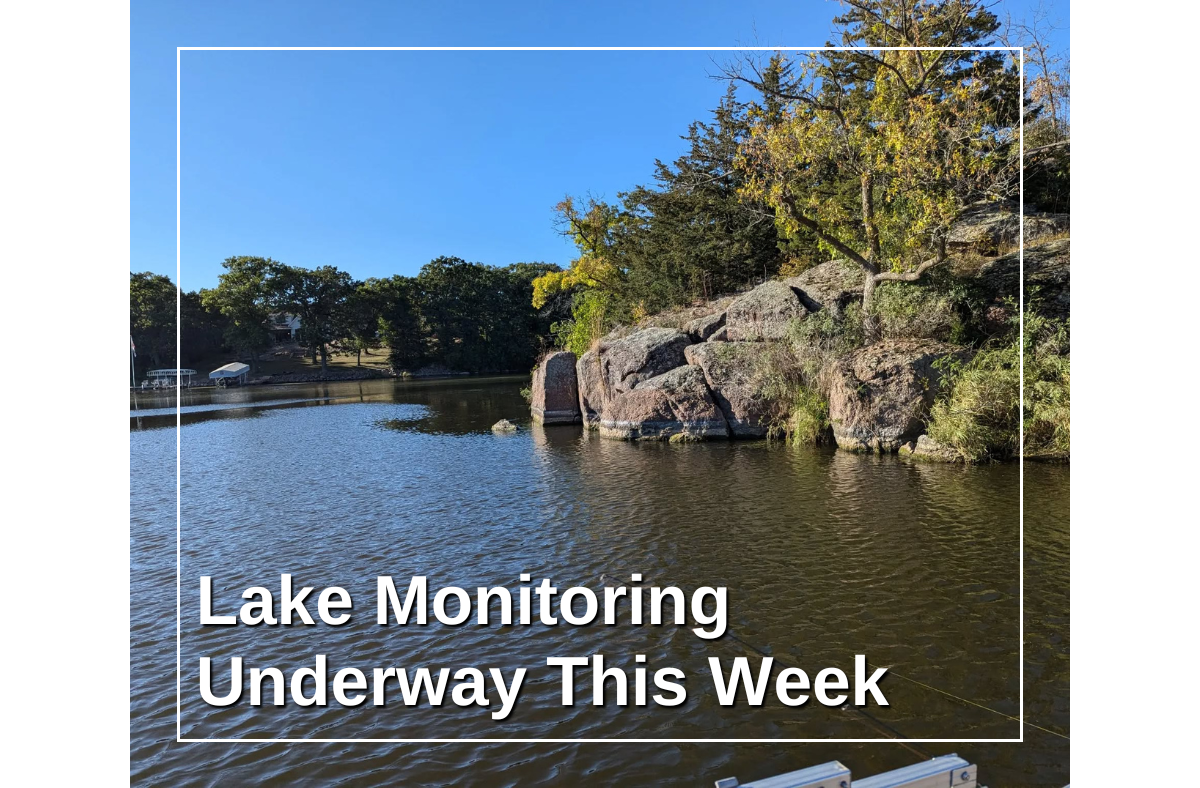
Lake Monitoring Underway This Week
Lake Monitoring
Endangered Resource Services (ERS) is out on the Sauk River Chain of Lakes this week conducting a chainwide point-intercept survey, along with targeted delineation of invasive milfoil.
A point-intercept survey is essentially a systematic check-up of aquatic vegetation throughout the lakes. ERS visits established locations across the Chain to document what plants are growing, where they are found and how abundant they are. During this work, they are also on the lookout for other aquatic invasive species and emerging threats, including purple loosestrife, flowering rush, and starry stonewort.
The additional milfoil delineation takes a closer look at areas where invasive milfoil is present to better understand its current distribution and help inform management decisions.
SRCLA will continue to share updates as the data comes back, particularly as it relates to invasive milfoil and any management activities planned for 2026. Collecting consistent, scientifically sound data is a key part of building successful long-term management programs for the Chain and everyone who enjoys it.
Natural Shorelines = Healthy Lakes
Natural Shorelines = Healthy Lakes
Natural Shorelines help our lakes' water quality, wildlife, and pollinators. Learn how you can become a Lake Steward and join others across Minnesota in helping to keep our lakes healthy and beautiful.
This shoreline series is a project with Minnesota Lakes and Rivers Advocates. Go here https://www.srcl.org/lake-steward-initiative to learn more about the Sauk River Chain of Lakes Association's Lake Steward initiatives.
Have you seen the signs?
Have you seen the signs?
Have you seen our signs? The Lake Steward program recognizes members who generally end up doing less (!) and by doing so, help to preserve the health of our lakes. The benefits of letting a shoreline buffer zone go natural, using fewer fertilizers which eventually find their way into the lakes, and bolstering shorelines with coils of natural vegetation versus rip rap, all result in improved lake waters and less work for humans. It’s easy to get started and make a big difference. Take the 4 question, 3 minute quiz to rate your lakeshore! https://docs.google.com/forms/d/e/1FAIpQLSddwEru_kSm-5dYbih0MqVyIXj9XCIi-OAaFwSQXTuIg73ezA/viewform
SRCLA Operations: A Look Behind the Scenes
SRCLA Ops
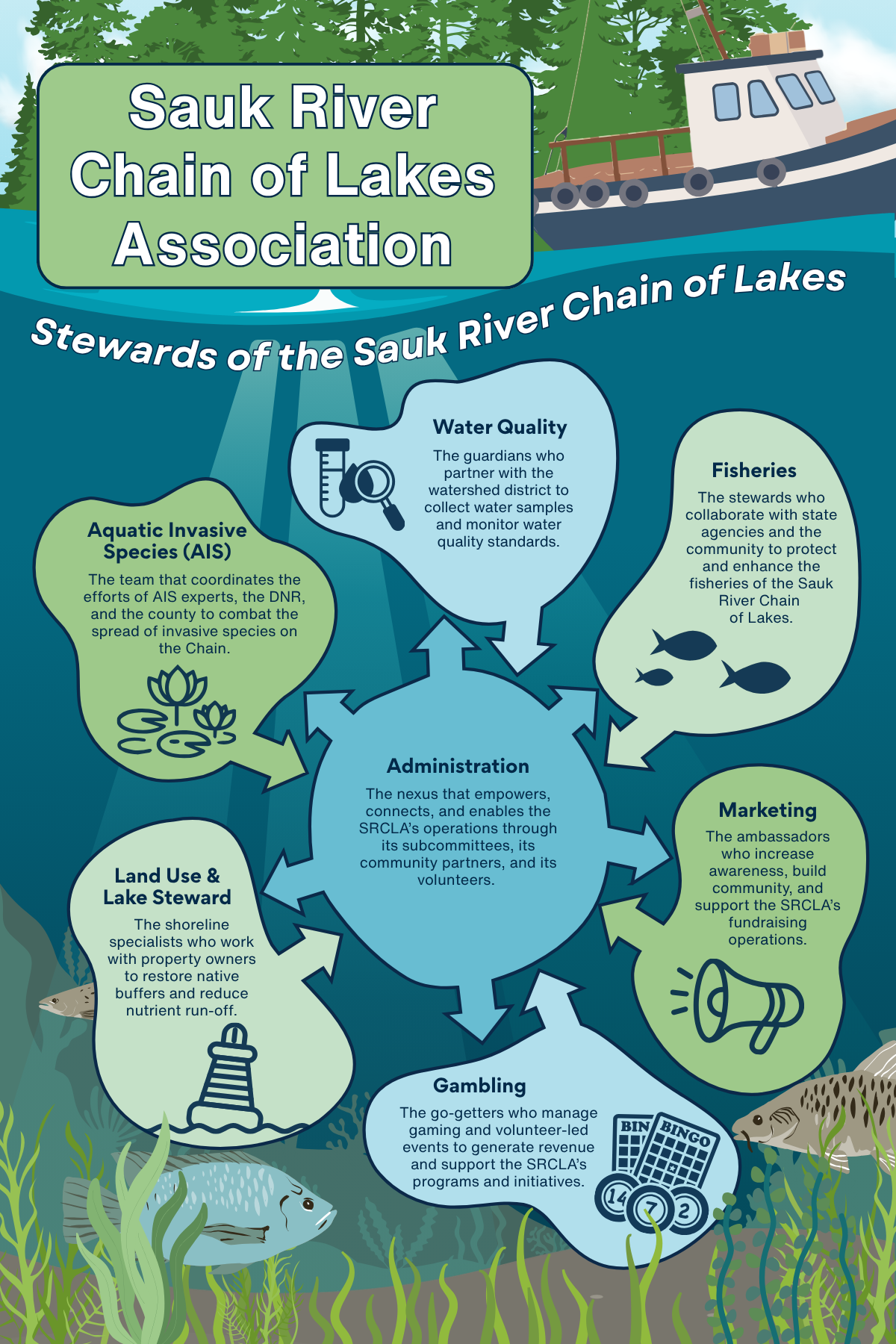
Ever wonder how the Sauk River Chain of Lakes Association (SRCLA) stays so organized? It takes a dedicated network of voluteers working in harmony to protect our beautiful waters! 🌊✨We created an infographic for a look behind the scenes at how our board and subcommittees connect. All of the moving parts connect back to our core mission: being proud stewards of the Sauk River Chain of Lakes since 1982! 🛶🐟
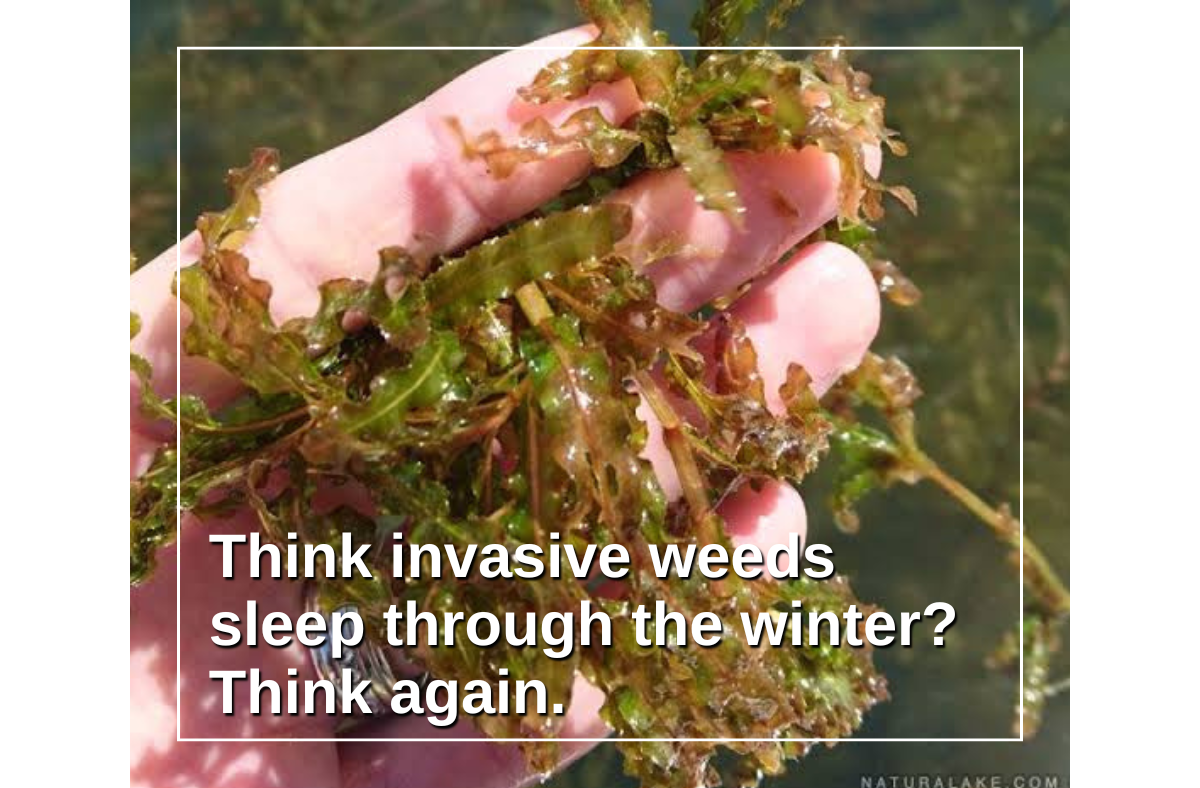
🌿 Think invasive weeds sleep through the winter? Think again. ❄️
Curly Leaf Pondweed Article
The SRCLA board continues to develop a strong partnership with AKA Collaborative to streamline our AIS processes. AKA Collaborative's Amy Kay assembled the following report (link here) that explains why it's important to have a plan to address curly-leaf pondweed (CLP) very early in the spring, as it behaves very differently than almost all other aquatic plants.
While our native lake plants are still dormant under the ice, CLP is already growing, expanding, and plotting its takeover. By the time you notice it on the surface in the spring, it might already be too late for a quick fix. To protect our lakes, we have to outsmart a plant that outsmarts winter.
Read through the full report to learn:
🔄 The Secret Weapon: What "turions" are and how they build an underground survival bank.
🛑 The Summer Illusion: Why the July "die-off" doesn't mean the problem is solved.
⏱️ Timing is Everything: When to manage CLP effectively before it drops its next generation.
🗺️ The Long Game: Why a multi-year strategy is the only way to protect our native habitats.
Effective lake stewardship isn't a one-season fix—it’s an ongoing commitment. 🌊
Full AKA Report here.
Wake Safe and Research into Impact of Powerboats
Wake Safe and Research into Impact of Powerboats
We have previously shared the results of a study by the St. Anthony Falls Lab at the U of M that documented the damage rapid acceleration and large wakes cause to shorelines and lake beds. One outcome of this research is a recommendation that wake boats limit their operation to depths greater than 20 feet and at least 500 feet from shore (nearly two football fields in length, if that's easier to visualize).
Our partners at Minnesota Lakes and Rivers (MLR) are offering to make maps for lake associations that depict the areas of a given lake that meet those two criteria. In the hopes of creating a map for the Chain lakes, we analyzed lake depths and concluded that there are effectively no areas on the Chain that meet the criteria.
While we support all on-the-water activities that the Chain enables, if you choose to create big wakes for surfing or skiing, please bear in mind the recommended minimum depths and distances to minimize the disruption of settled nutrients on the lake beds and damage to our shorelines.
* Wake surfing at least 500 feet from shore to reduce the wave energy impact on shorelines to the same level as a non-wake surf watercraft. Phase I Research: https://cse.umn.edu/safl/news/umn-researchers-study-waves-created-recreational-boats
* Operating in water depths of at least 20 feet to minimize subsurface ecological impact. Phase II Research: https://sites.google.com/umn.edu/healthywatersinitiative/phase-ii-research)
Lets keep loons coming back!
Lets keep loons coming back!
Be a lake steward! It’s easy and there’s help. This shoreline series is a project with Minnesota Lakes and Rivers Advocates. Go here to learn more about the Sauk River Chain of Lakes Association's Lake Steward initiatives.

Starry Trek is August 8!
Starry Trek is August 8!
Stearns COLA will again sponsor Starry Trek this year on August 8th beginning at 8:30 AM in Cold Spring at the Blue Heron parking lot on MN Highway 23. Starry Trek has successfully been able to find the presence of Starry Stonewort in Grand Lake, Carnelian Lake, and Two Rivers Lake resulting in successful containment within the discovered areas. Early discovery is of prime importance in keeping Starry from taking control of the infestation. We need as many lakes in Stearns County as possible to volunteer and learn how to spot Starry Stonewort in each Stearns County lake. We will inspect up to 25 lakes again this year and it would be great to have representatives from as many of these lakes as possible.
PLEASE SIGN UP TODAY AND HELP STOP THE SPREAD OF AIS IN STEARNS COUNTY. https://maisrc.umn.edu/starrytrek
Jim Meinz will again lead the effort this year and if you have any questions feel free to email at jmeinz1@gmail.com, or call him at 320 249 3996.
Response to Reports of Fish Die Off
SRCLA Response to Fish Die Off
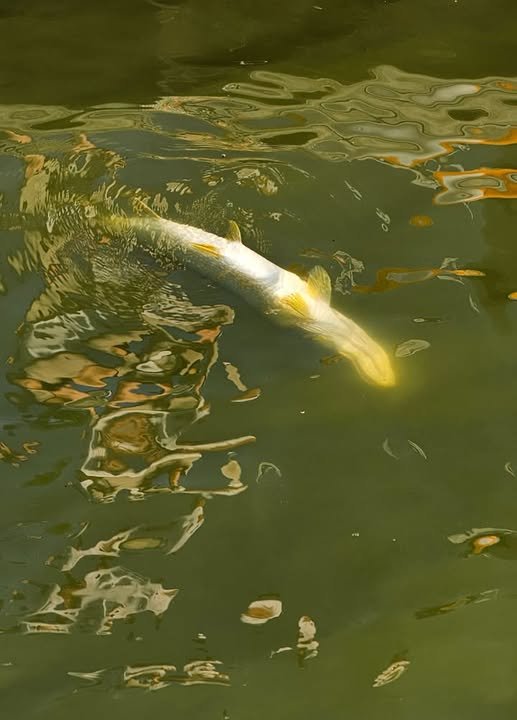
Recently we have been aware of unusually large fish die-offs on the Chain. A big thank you to everyone for reaching out to us and reporting information on these die-offs. According to the DNR, it is not surprising there is more die-off this year with the extremely long stretch of hot weather we have been experiencing. And it probably won’t get better any time soon. The DNR will not send anyone out to test any dead fish and no action will be taken, as this is considered a normal phenomenon. The majority of the fish kill appears to be northern pike and catfish.
WHY IS THIS HAPPENING? Jon Folkedahl is our Water Quality lead, and he and his team collect water samples monthly for lab analysis from six of the Chain lakes, concurrently measuring dissolved oxygen (DO) and temps at eight locations. Last Wednesday, July 15, was the latest sampling event. He noted that there were a variety of DO conditions across the Chain. Water temps at one meter depth were quite consistent at 85 degrees throughout. The DO levels did vary but most of the lakes had survivable DO levels down to around 6 - 8 feet of depth. A few locations held oxygen levels above 2 ppm all the way to the bottom, even in deeper locations in excess of 30 feet. Some lakes were well stratified, with DO levels and temps falling steadily from top to bottom. Schneider Lake, for example, lost oxygen and heat rapidly and steadily with depth, falling to zero oxygen by about the 15 - 20 foot depth and temps in the 40s as the probe neared the bottom around 33 feet. The riverine lakes, however, were well mixed with respect to both temp and dissolved oxygen, top to bottom above 2 ppm dissolved oxygen. Knaus and Krays - as usual - held the most oxygen of all the Chain lakes, yet their overall depths where we sample are 5 - 6 feet.
The Chain is a super complex system and a lot of factors come into play. Northern pike can withstand more stress and lower oxygen levels than most fish in Minnesota lakes. They can tolerate long term oxygen levels as low as 2 ppm or even lower. Same with catfish. Other Minnesota game fish are less tolerant of low oxygen, such as walleye and panfish. Therefore it seems unlikely that the northern pike and catfish would be the first to die strictly due to low oxygen levels. We are guessing - and again this is just a guess - that people fishing tend to keep the walleyes and the larger panfish, while releasing the northerns and catfish. Catch and release does stress all fish, and with lake water conditions being less than optimal, some of the northerns and catfish that get released just can't recover.
WHAT CAN I DO TO HELP? There are two musky fishing leagues in Minnesota. They fish on Wednesdays and both leagues suspend operations when water temps hit 80 degrees as muskies do not fare well in hot temps and low dissolved oxygen levels, and the stress of catching them (as they are fierce battlers) and releasing is often a death sentence. This year they suspended the league the week of July 6th and do not anticipate opening the league again until mid-to-late August.
In that spirit we would like to ask the fishing community to exercise care and caution should you choose to fish while these conditions persist.
Back to the muskies; the DNR would like people to be alert for any dead muskies they see and if they have tags they would like to know the tag numbers. You can communicate that on our Facebook page, directly to the SRCLA board and/or to the DNR (joe.stewig@state.mn.us).