
Minnesota's County AIS Prevention Aid facing cuts in 2027
MN County Aid Funding at Risk in 2027
Minnesota's County AIS Prevention Aid program, which yields a hundredfold return on investment in cleanup cost savings, faces a 50% funding reduction beginning in 2027. These impending cuts threaten local water quality, fishing economies, and property values across the state unless preventative measures are sustained. What can you do?
Contact state legislators: Reach out to state representatives to advocate for reversing the scheduled 50% funding cut before it takes effect in 2027. Emphasize that the program has kept taxpayer costs under $2 a year while saving millions in long-term management. Your local State Representative is Lisa Demuth Phone: (651) 296-4373 Email: rep.lisa.demuth@house.mn.gov
Continue to practice standard AIS prevention: Continuously clean, drain, and dry all watercraft, trailers, and equipment when moving between water bodies to prevent the physical spread of species like zebra mussels.
Starry Trek Results
Starry Trek Results
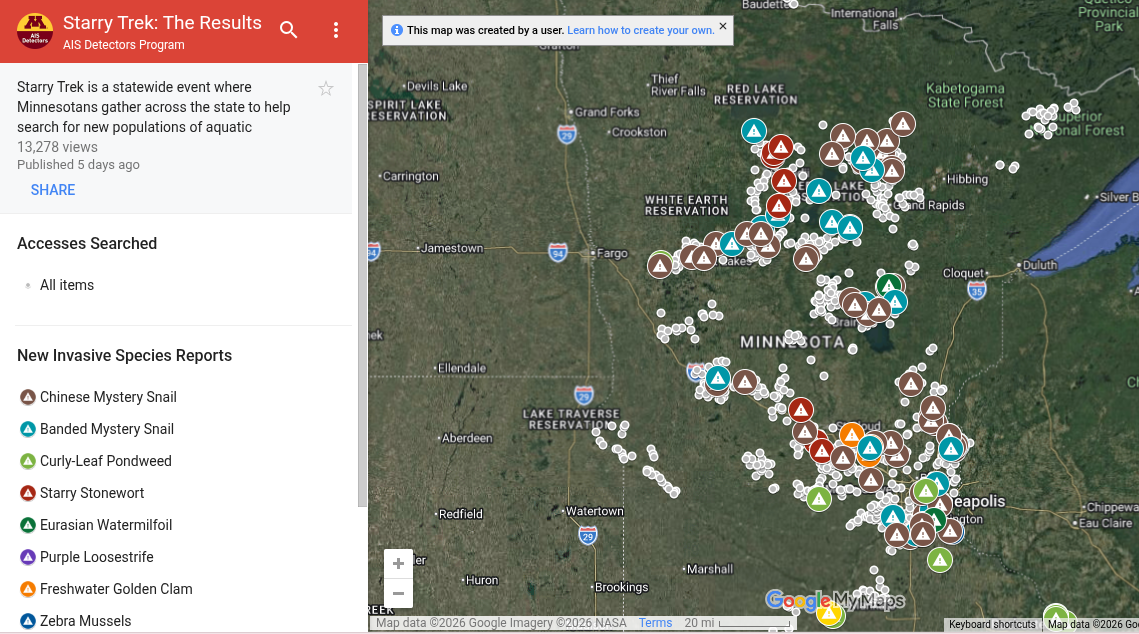
Thank you to the 173 volunteers who helped protect Minnesota lakes during this year's Starry Trek event. 266 public accesses were searched, and 230 water bodies were checked across Minnesota. You can view past records from 2017 to today on the Starry Trek Results Map. Save the Date! The 2027 Starry Trek event will take place on August 14th.
NEW AIS FOUND: Help us keep eyes on the Chain!
New AIS Found
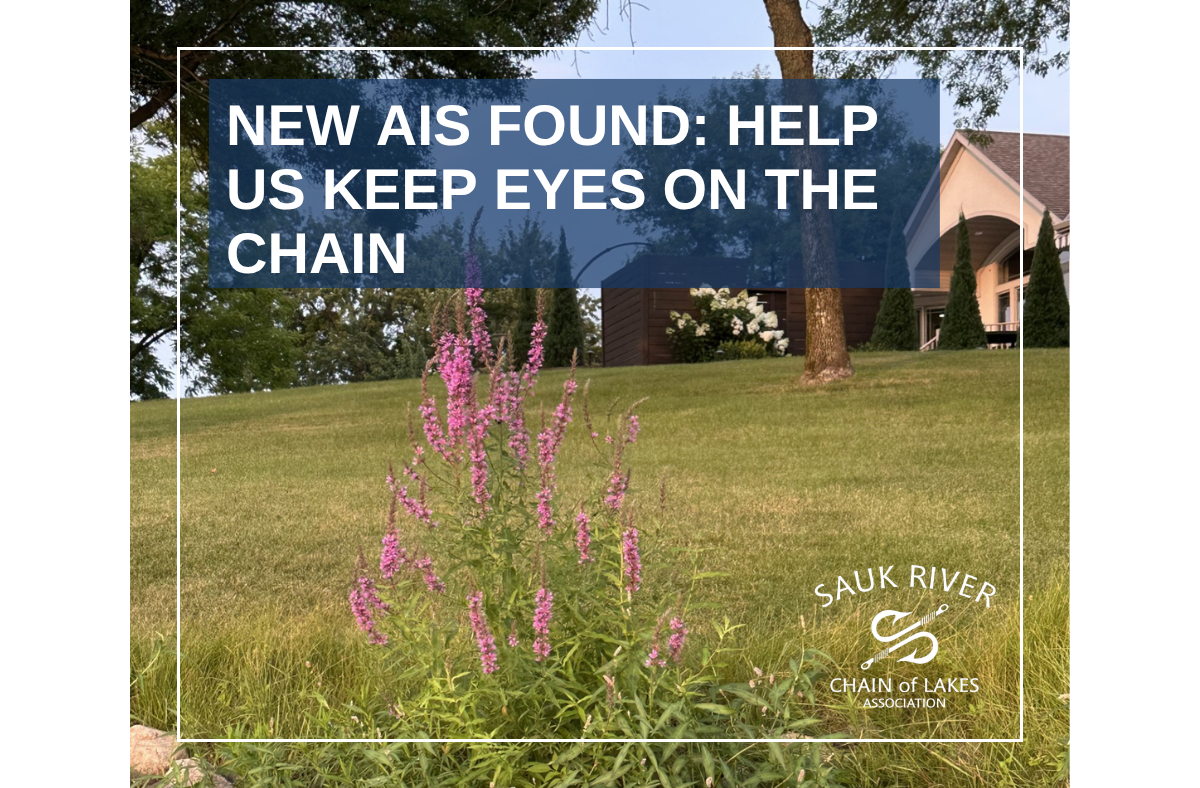
Purple loosestrife has been identified on a shoreline of the Sauk River Chain during this season’s chainwide point-intercept survey. The known occurrence is limited, making early detection and rapid response especially important. We’re asking shoreline property owners to be on the lookout: check your shoreline, keep an eye on neighboring properties, and know what to look for as you’re out around the Chain.
Prevention and Early Detection and Rapid Response (EDRR) are some of our best strategies for keeping a new invasive species finding from becoming a larger management challenge.
👉 Read our new article to learn how to identify purple loosestrife and what to do if you find it. Contact any member of the AIS Team on the Board if you have questions.
Know the plant. Keep watch. Help us keep eyes on the Chain.

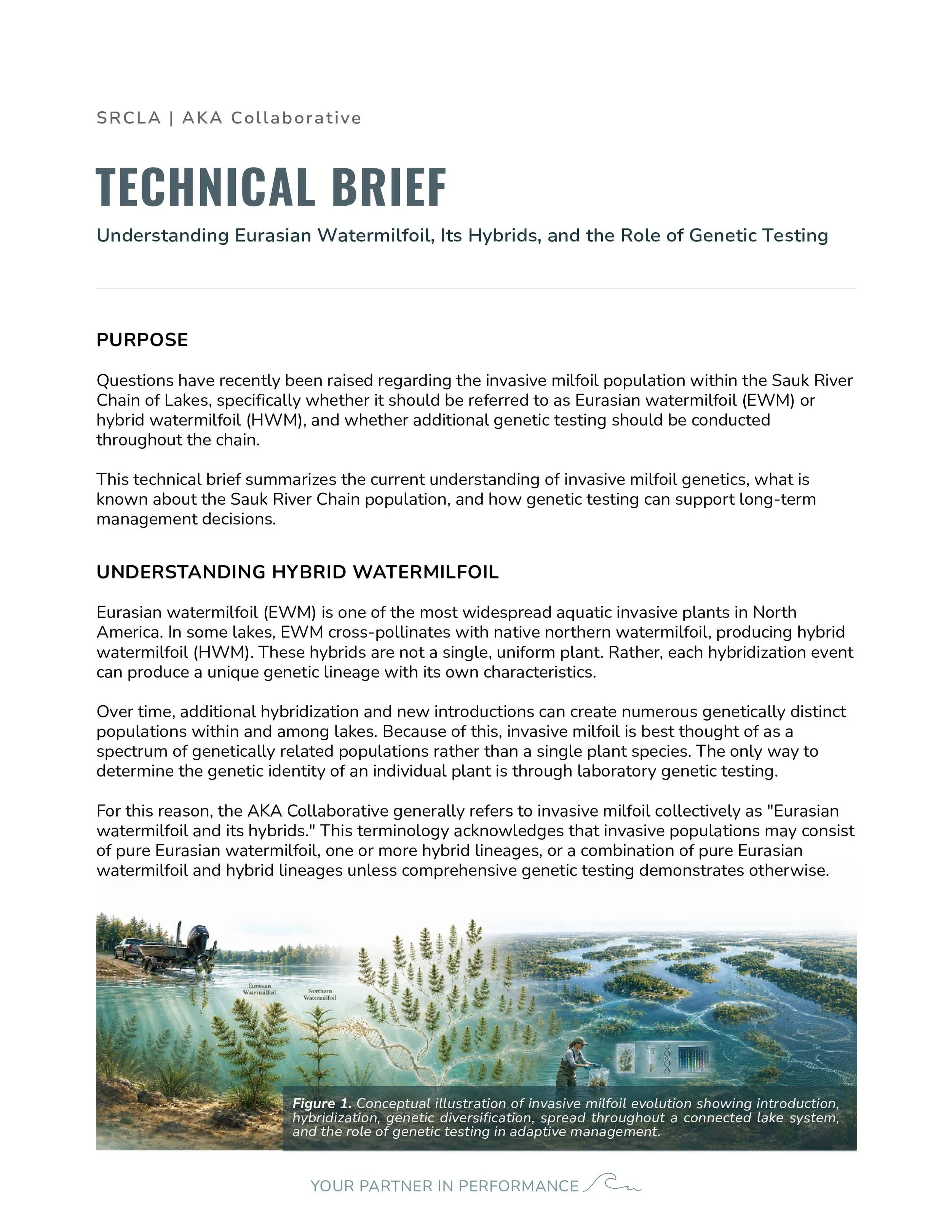
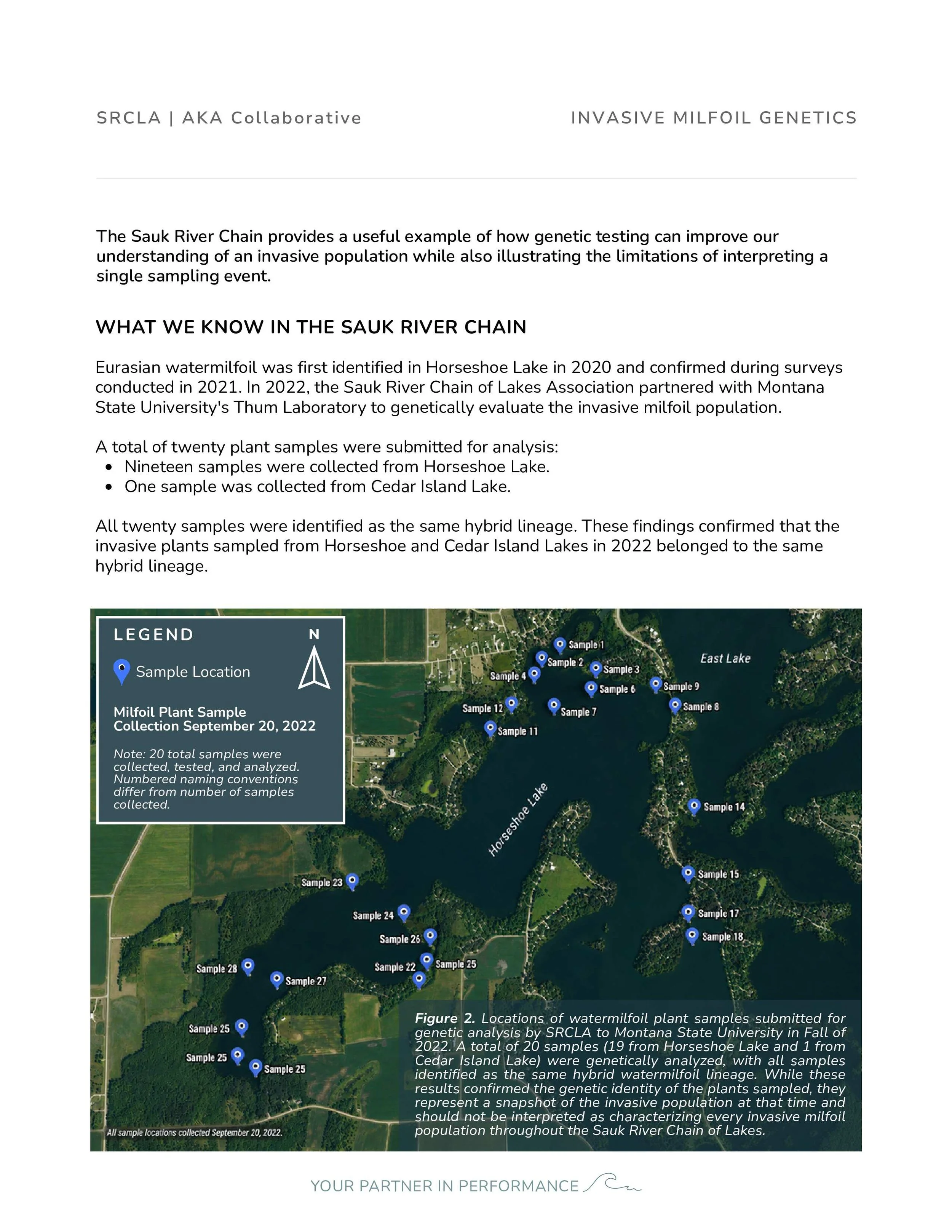
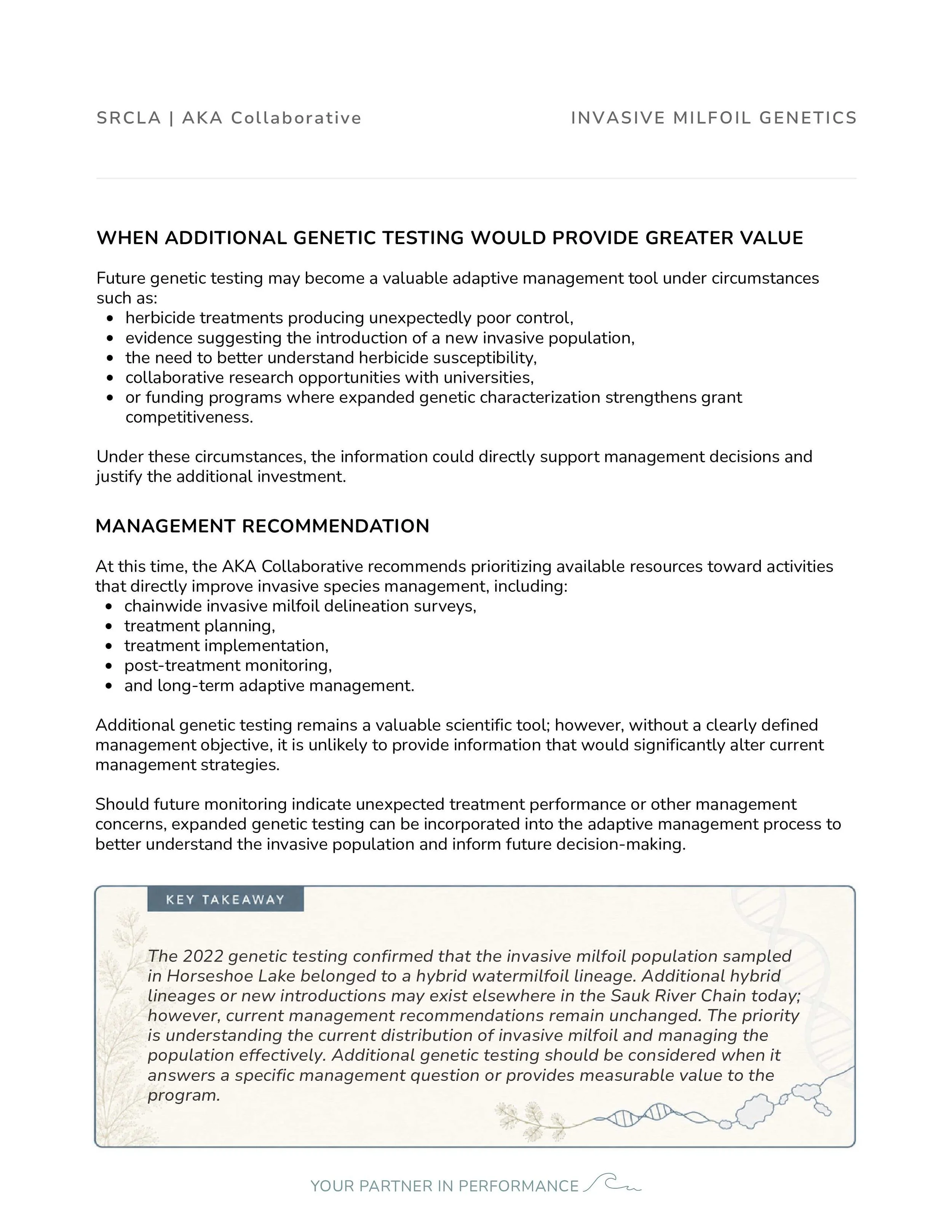
Technical Brief: Understanding Eurasian Watermilfoil, Its Hybrids, and the Role of Genetic Testing
Technical Brief
Make it stand out
Whatever it is, the way you tell your story online can make all the difference.
Make it stand out
Whatever it is, the way you tell your story online can make all the difference.
Make it stand out
Whatever it is, the way you tell your story online can make all the difference.
Make it stand out
Whatever it is, the way you tell your story online can make all the difference.
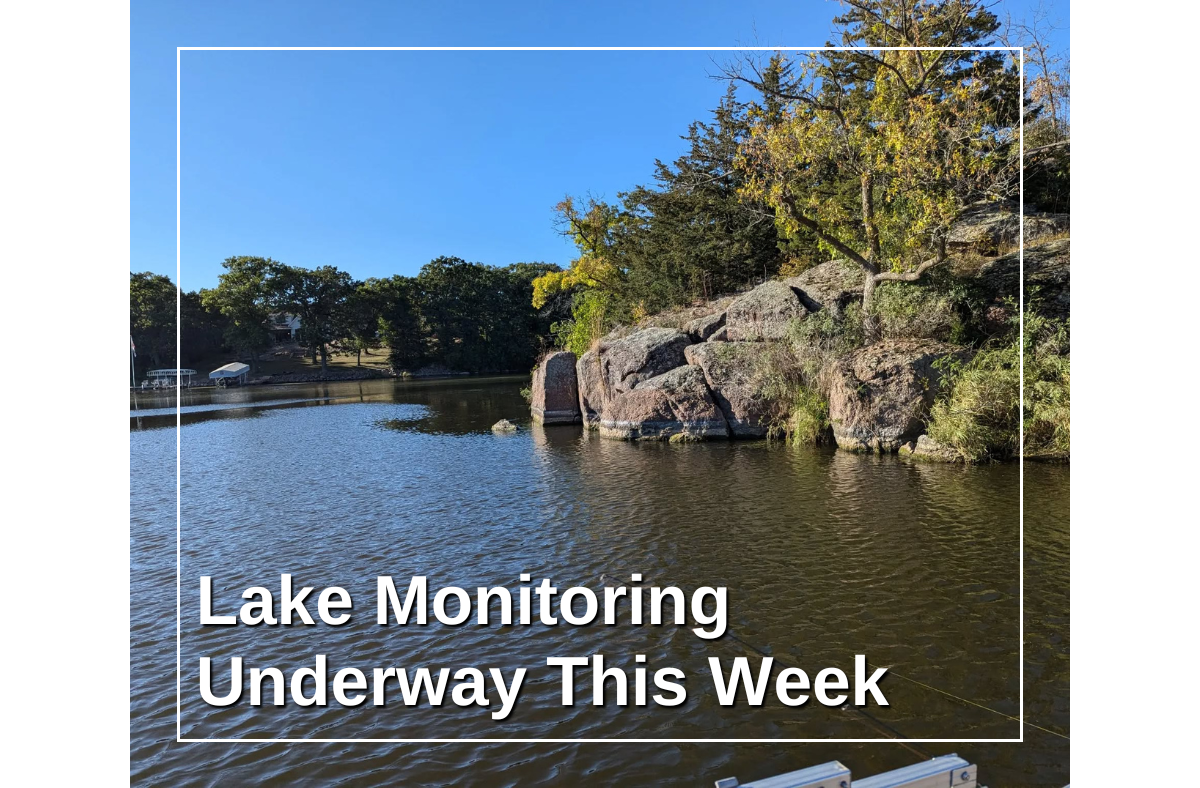
Lake Monitoring Underway This Week
Lake Monitoring
Endangered Resource Services (ERS) is out on the Sauk River Chain of Lakes this week conducting a chainwide point-intercept survey, along with targeted delineation of invasive milfoil.
A point-intercept survey is essentially a systematic check-up of aquatic vegetation throughout the lakes. ERS visits established locations across the Chain to document what plants are growing, where they are found and how abundant they are. During this work, they are also on the lookout for other aquatic invasive species and emerging threats, including purple loosestrife, flowering rush, and starry stonewort.
The additional milfoil delineation takes a closer look at areas where invasive milfoil is present to better understand its current distribution and help inform management decisions.
SRCLA will continue to share updates as the data comes back, particularly as it relates to invasive milfoil and any management activities planned for 2026. Collecting consistent, scientifically sound data is a key part of building successful long-term management programs for the Chain and everyone who enjoys it.
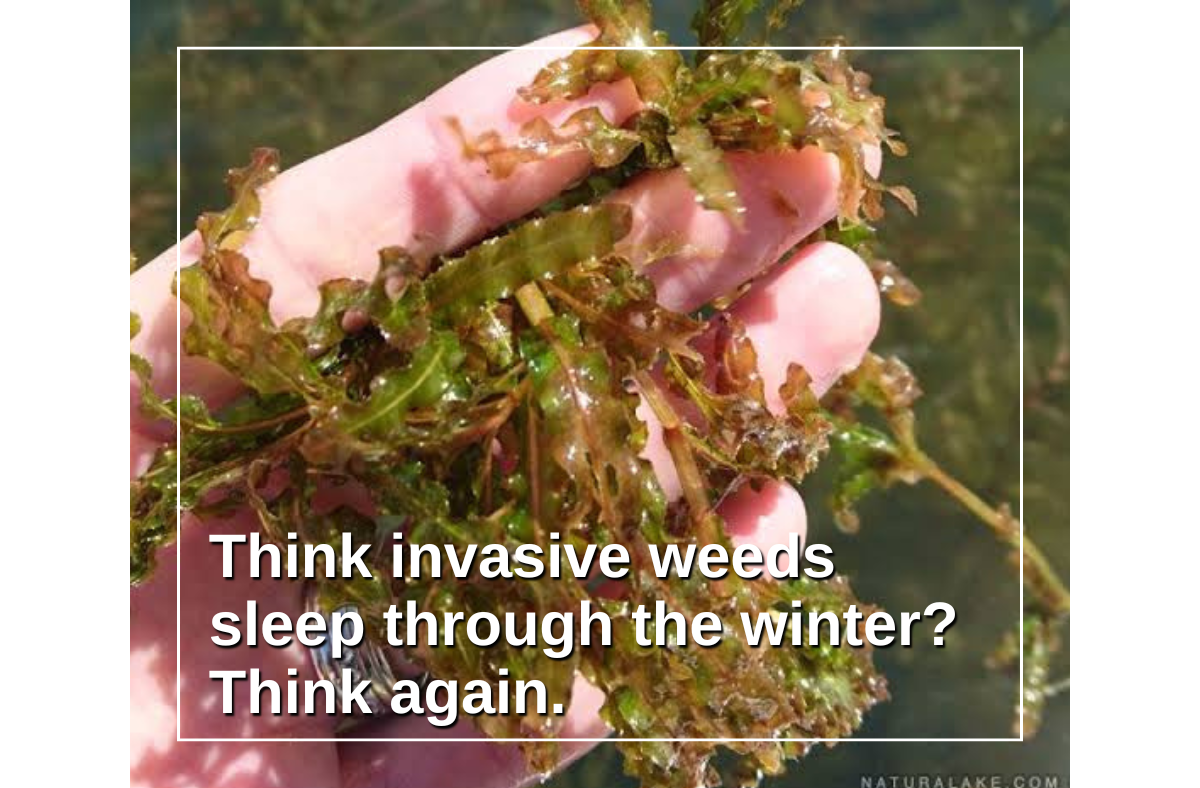
🌿 Think invasive weeds sleep through the winter? Think again. ❄️
Curly Leaf Pondweed Article
The SRCLA board continues to develop a strong partnership with AKA Collaborative to streamline our AIS processes. AKA Collaborative's Amy Kay assembled the following report (link here) that explains why it's important to have a plan to address curly-leaf pondweed (CLP) very early in the spring, as it behaves very differently than almost all other aquatic plants.
While our native lake plants are still dormant under the ice, CLP is already growing, expanding, and plotting its takeover. By the time you notice it on the surface in the spring, it might already be too late for a quick fix. To protect our lakes, we have to outsmart a plant that outsmarts winter.
Read through the full report to learn:
🔄 The Secret Weapon: What "turions" are and how they build an underground survival bank.
🛑 The Summer Illusion: Why the July "die-off" doesn't mean the problem is solved.
⏱️ Timing is Everything: When to manage CLP effectively before it drops its next generation.
🗺️ The Long Game: Why a multi-year strategy is the only way to protect our native habitats.
Effective lake stewardship isn't a one-season fix—it’s an ongoing commitment. 🌊
Full AKA Report here.
Starry Trek is August 8!
Starry Trek is August 8!
Stearns COLA will again sponsor Starry Trek this year on August 8th beginning at 8:30 AM in Cold Spring at the Blue Heron parking lot on MN Highway 23. Starry Trek has successfully been able to find the presence of Starry Stonewort in Grand Lake, Carnelian Lake, and Two Rivers Lake resulting in successful containment within the discovered areas. Early discovery is of prime importance in keeping Starry from taking control of the infestation. We need as many lakes in Stearns County as possible to volunteer and learn how to spot Starry Stonewort in each Stearns County lake. We will inspect up to 25 lakes again this year and it would be great to have representatives from as many of these lakes as possible.
PLEASE SIGN UP TODAY AND HELP STOP THE SPREAD OF AIS IN STEARNS COUNTY. https://maisrc.umn.edu/starrytrek
Jim Meinz will again lead the effort this year and if you have any questions feel free to email at jmeinz1@gmail.com, or call him at 320 249 3996.
2026 Program Update: Aquatic Vegetation Management
2026 Program Update: Aquatic Vegetation Management
This spring, SRCLA continued its commitment to protecting and improving the Sauk River Chain of Lakes through a coordinated aquatic vegetation management program. All of the documentation can be found on the updated Current Projects page.
Using early-season aquatic plant surveys, priority Curlyleaf Pondweed (CLP) infestations were identified and treated with aquatic herbicides across 114.9 acres on Little Cedar Island, East, Knaus, Krays and Zumwalde Lakes. In addition, 45 acres of mechanical harvesting were completed on Becker, Great Northern and Long Lakes to improve navigation and manage localized nuisance aquatic vegetation.
This year’s program reflects a coordinated approach that combines comprehensive aquatic vegetation surveys, targeted management, ongoing monitoring, and long-term planning to support informed decision-making across the Chain.
This work is guided by AKA Collaborative, bringing together a team of experienced partners to support every phase of the program—from aquatic vegetation surveys and treatment planning to pesticide applications, mechanical harvesting and long-term strategy. Thank you to Endangered Resource Services (ERS) for conducting extensive aquatic vegetation surveys and providing the data that guide management decisions, AquaTerra Solutions (ATS) and Professional Lake & Land Management (PLM) for aquatic pesticide applications, and Weeds Up for mechanical harvesting.
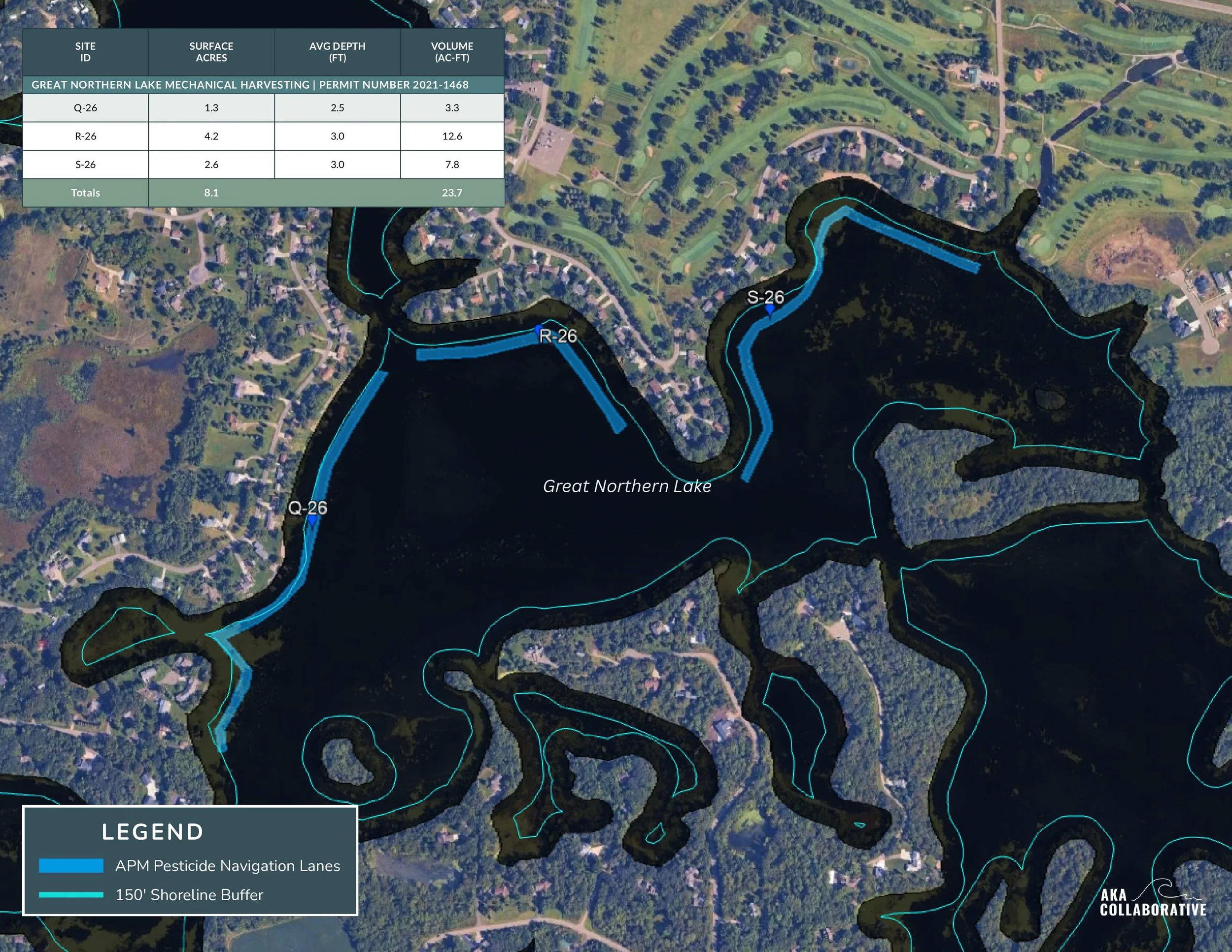
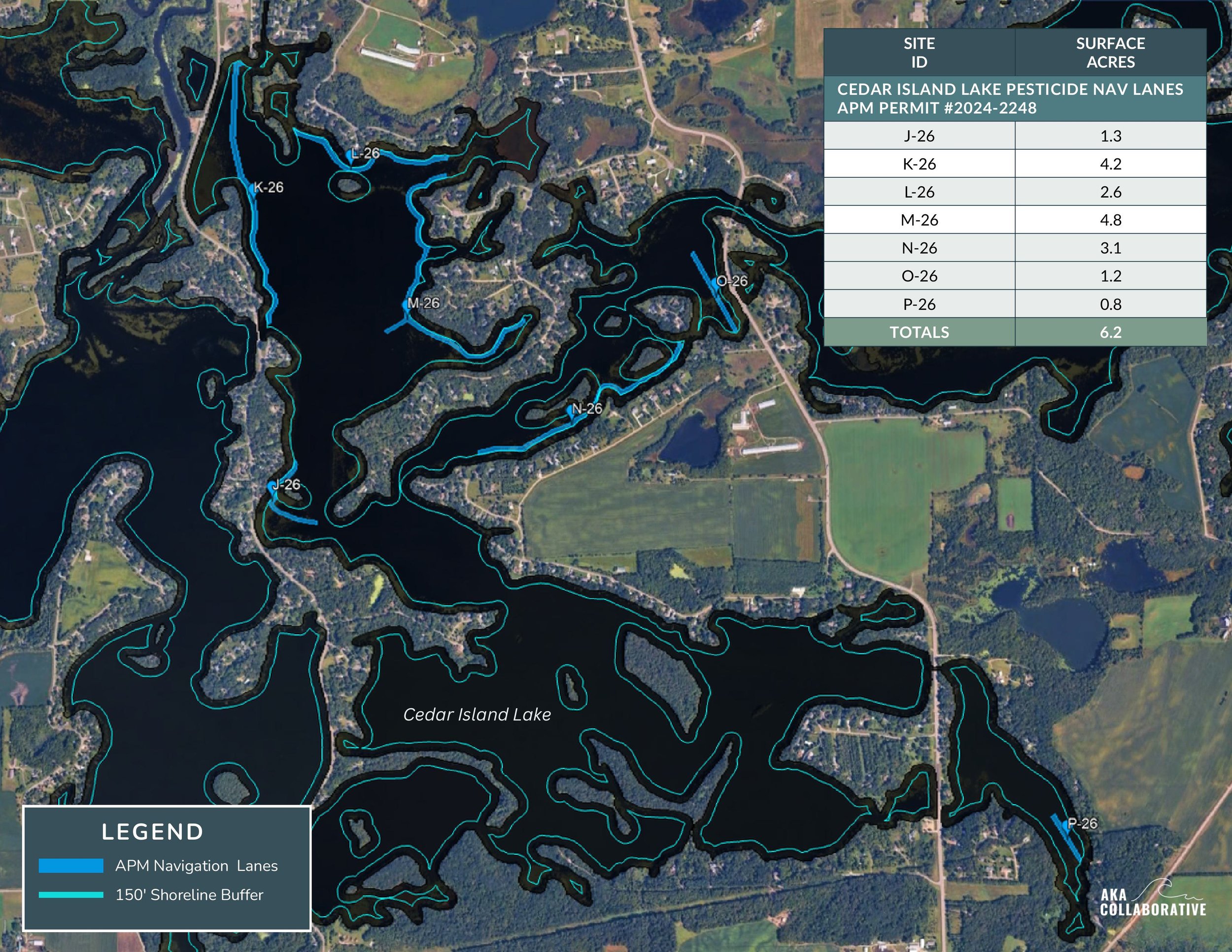
In addition to the CLP treatments completed in May, aquatic plant management (APM) permits were approved for navigational access lanes on Great Northern and Cedar Island Lakes. Those treatments were completed by AquaTerra Solutions at the end of June. Additional navigational lanes may be permitted later this summer if nuisance vegetation creates access limitations beyond the 150-foot shoreline zone.
We’re excited to share that preliminary post-treatment survey results show excellent CLP control throughout all treated areas. Additional peak growing season surveys will be conducted in August to evaluate native aquatic plant communities, map invasive milfoil, monitor for emerging aquatic invasive species, and continue guiding future management decisions.
Over the coming weeks, we’ll continue sharing survey results, treatment maps, field photos, and additional updates highlighting this year’s work. Thank you to everyone who continues to support SRCLA’s efforts to protect and enhance the Sauk River Chain of Lakes!
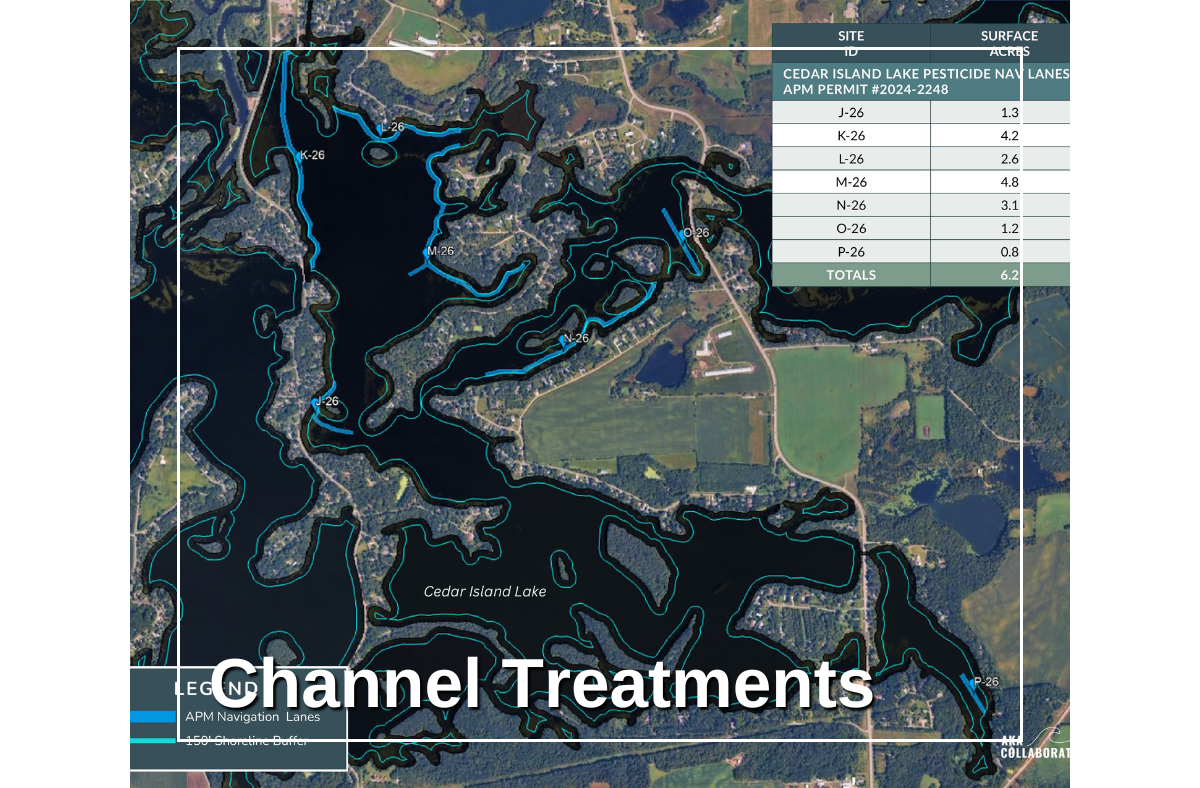
Channel Treatments
Channel Treatments
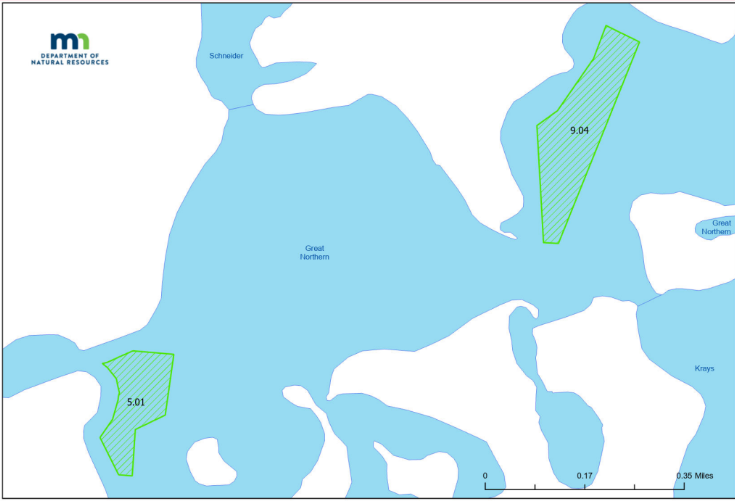
The SRCLA received permits to create navigation channels on four lakes. These permits cover both invasive and native weeds, and are intended to provide access to the main parts of the Chain. Great Northern was treated on Thursday, June 25th and the other lakes on Friday, June 26th.
NOTE: The DNR considers five lakes to be part of Cedar Island Lake, which is why one of the two maps below is labeled as it is. Most of the treatments on the 26th took place on Koetter and East Lakes.
What's in our water?
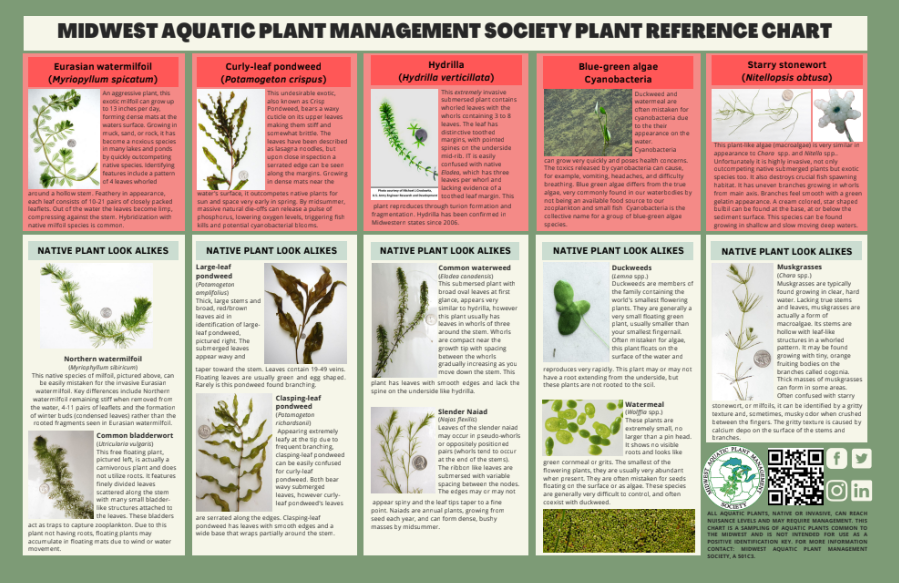
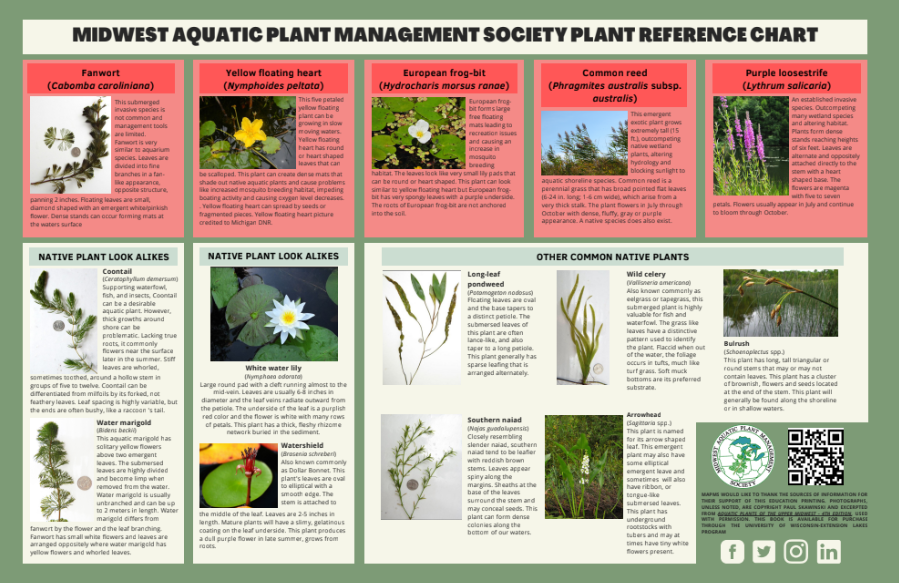
AIS Reference Chart
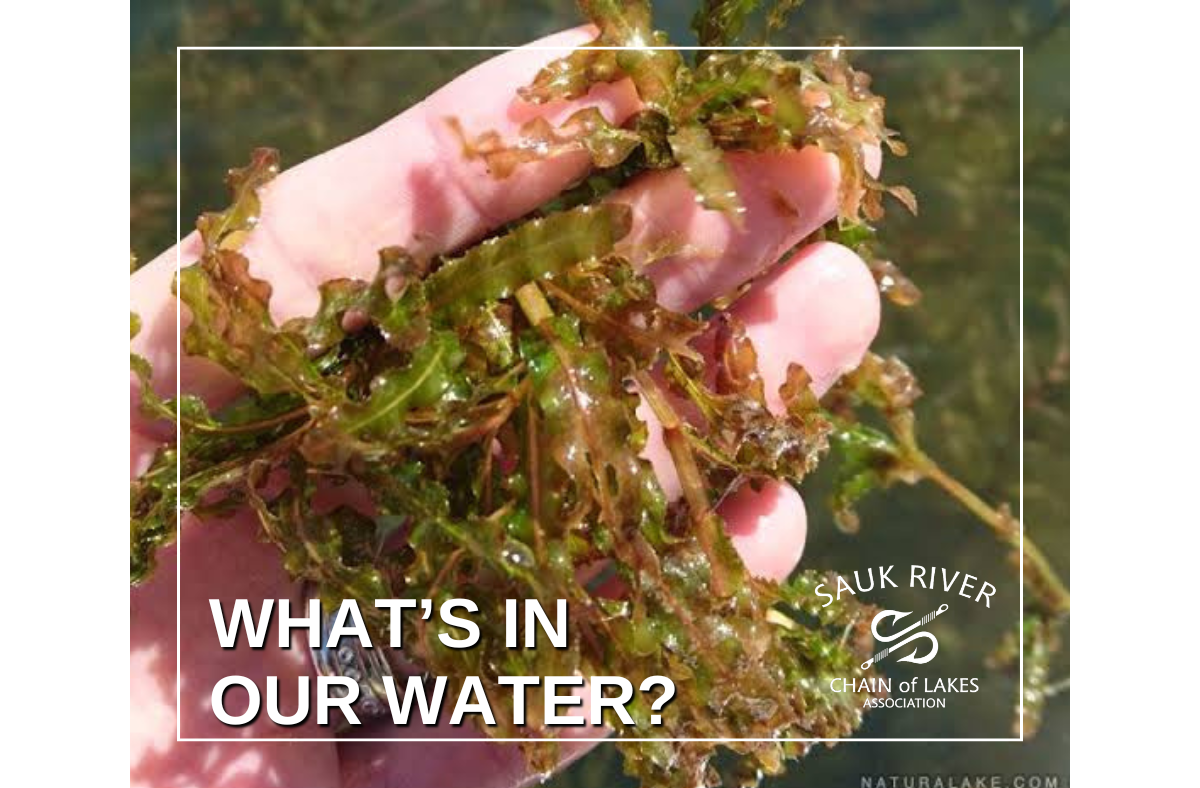
As shared by Amy Kay at the 2026 Annual Meeting, one of the first steps to developing a Lake Management Framework is understanding what is in our water. Of particular interest to the Chain are Culy Leaf Pondweed (CLP) and Hybrid Watermilfoil (HWM), both invasive. This helpful chart was handed out at the meeting, click here to download the PDF.
Curlyleaf Pondweed Harvest 6/12/26
Curlyleaf Pondweed harvesting 6/12/26
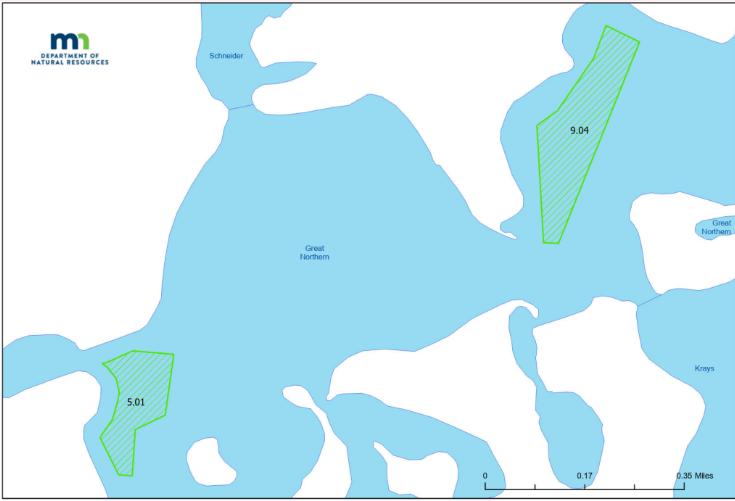
The DNR issued aquatic plant management permits to harvest CLP in the areas shown in the map below. Harvesting was completed on June 12. The SRCLA is pursuing additional permits for other areas across the Chain as well. Stay tuned!
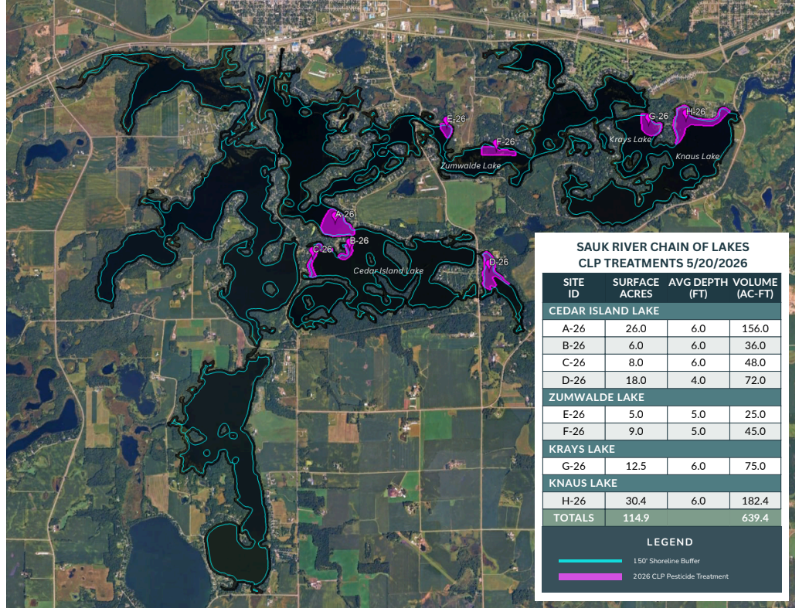
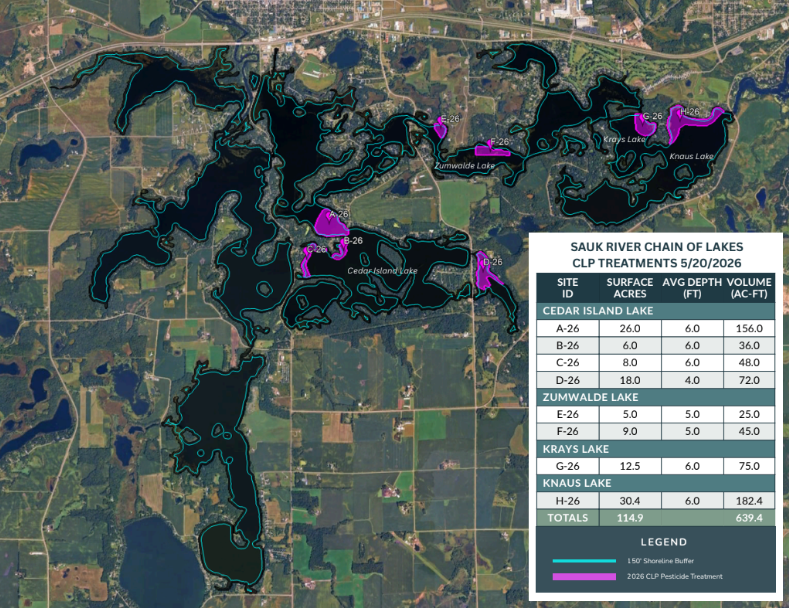
Curlyleaf Pondweed Treatments 5/20/26
Curlyleaf Pondweed treatments 5/20/26
On May 20, 2026, aquatic invasive species management activities were conducted on the Sauk River Chain of Lakes targeting Curlyleaf Pondweed (CLP), an invasive aquatic plant known to impact native plant communities, recreation, and overall lake health.
Approximately 115 acres of permitted management areas were treated across Cedar Island, Zumwalde, Krays, and Knaus Lakes. Applications of Flumigard® SC (flumioxazin) were performed by Minnesota-licensed aquatic pesticide applicators from AquaTerra Solutions and PLM Lake & Land Management in accordance with Minnesota DNR permit requirements, product label directions, and all applicable state regulations.
Weather and water conditions on the treatment day were favorable for application, supporting effective product distribution within the targeted management areas. These treatments are part of the Sauk River Chain of Lakes Association's ongoing efforts to manage aquatic invasive species, protect recreational use, and support the long-term ecological health of the chain. For detailed maps of each lake treated click here.
DNR: Help Protect Minnesota Waters
DNR: Help Protect Minnesota Waters
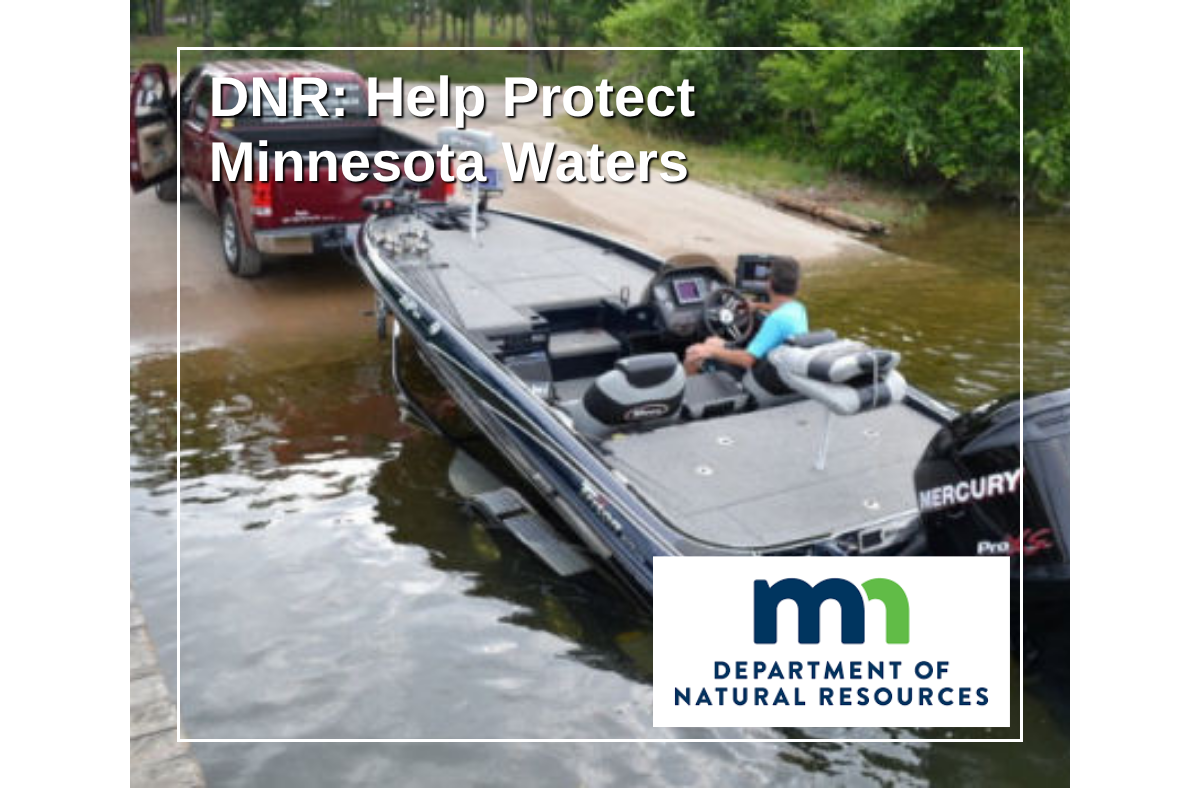
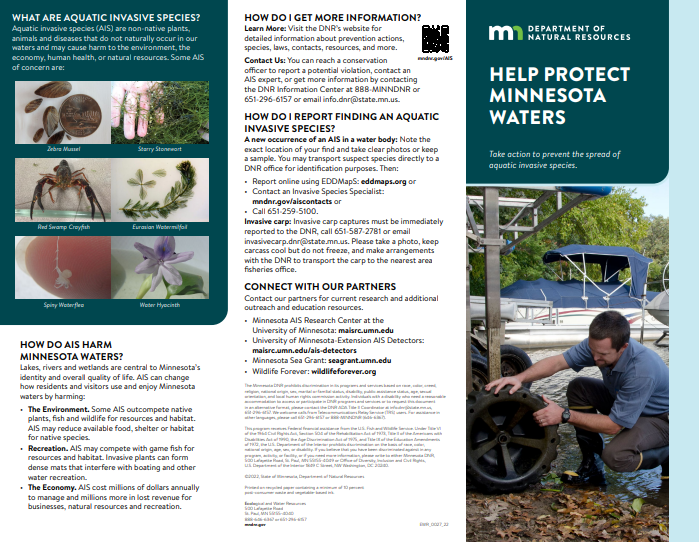
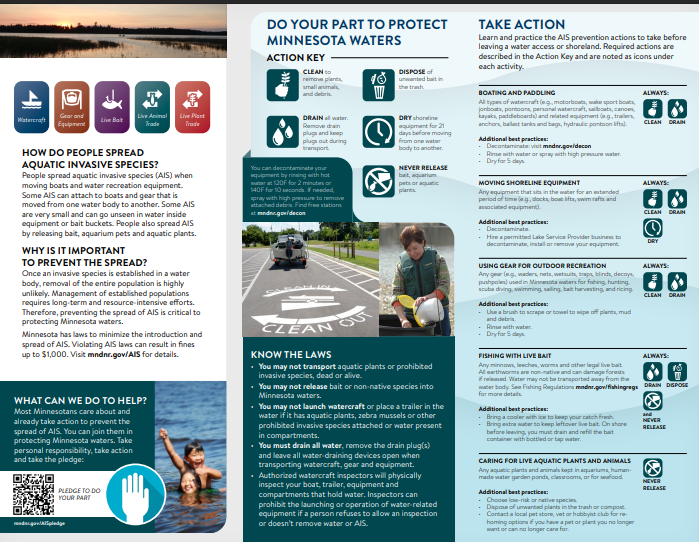
🌊 Protect our lakes! 🚣♂️ Stopping Aquatic Invasive Species (AIS) starts with us. Whether you’re a boater, paddler, or lake shore owner, here is how you can do your part to keep Minnesota's waters healthy:
Boaters & Paddlers
Clean: Remove all visible plants, mud, and debris from your watercraft and trailer before leaving the access.
Drain: Pull the plug! Drain all water from your boat, livewell, and bait buckets. Keep plugs out during transport.
Dry: For best results, let your boat and gear dry for 5 days before heading to another water body.
Lake Shore Owners
Dry Equipment: If you are moving docks, boat lifts, or rafts to a different lake, they must dry for 21 days.
Professional Help: Consider hiring a permitted Lake Service Provider to safely decontaminate and move your equipment.
Everyone can help!
Dispose of Bait: Never release unused bait into the water. Put it in the trash.
Decontaminate: Use high-pressure, hot water (120°F–140°F) to kill unseen AIS.
Report: See something suspicious? Take a photo, note the location, and report it to the DNR or via EDDMapS.
Let's keep our waters clear for everyone to enjoy! 💧 Go to Aquatic Plant Management and Aquatic Plant Management for Home Owners to learn more. To download the images below as a PDF, click here.
Ask The Board: Are Chemicals Safe for Fish?
Ask The Board: Are Chemicals Safe for Fish?
Steve Reid, SRCLA Board Member since 2023, was recently asked if the chemicals used to control weeds have any negative impact on our fish or other beneficial biological entities (turtles, frogs, dragonflies) in our lakes. Steve discussed this with one of the Association’s partners (in treatment), Dan McEwen, Ph.D., CLP, Principal Scientist at Limnopro. Dan’s response is summarized below:
Generally speaking, the risks of any negative effects from chemicals on animals living in/around our treatment areas is less than the risk of leaving nuisance plants growing in the lake. Dense plant growth leads to reduced oxygen, blue-green algae blooms, and can make foraging difficult for the types of sports fish most people want to catch (e.g., northern, bass, sunfish, walleye, etc.). Chemicals that go into the lake are heavily regulated by EPA. It would be misleading to say there was zero risk, but the risks are known and minimal, particularly given that animals can move, and the areas treated in lakes are small relative to the whole lake.
Dan also provided two documents, the first from the Aquatic Ecosystem Restoration Foundation, a non-profit organization interested in “science-based solutions to restore and maintain sustainable water resources” and the second is a government document written by John Madsen, who is now retired but arguably the world's expert on everything and anything that has to do with plant control in lakes. You can read through his chapters 3 and 5 here.
Great questions! Thank you, Steve, for the follow-up on this important topic!
Ask the Board: Plan for 2026 Treatments?
Ask the Board: Plan for 2026 Treatments?
We’re starting a new feature, responding to questions directed to the SRCLA Board. Here’s a question submitted to the board via the “Contact’ page:
“Last year the Horseshoe lake chain was treated for weeds which resulted in an enormous improvement in weed reduction. Are there any plans to do the same thing this year? If so, will it be more, less or about the same. Thanks!”
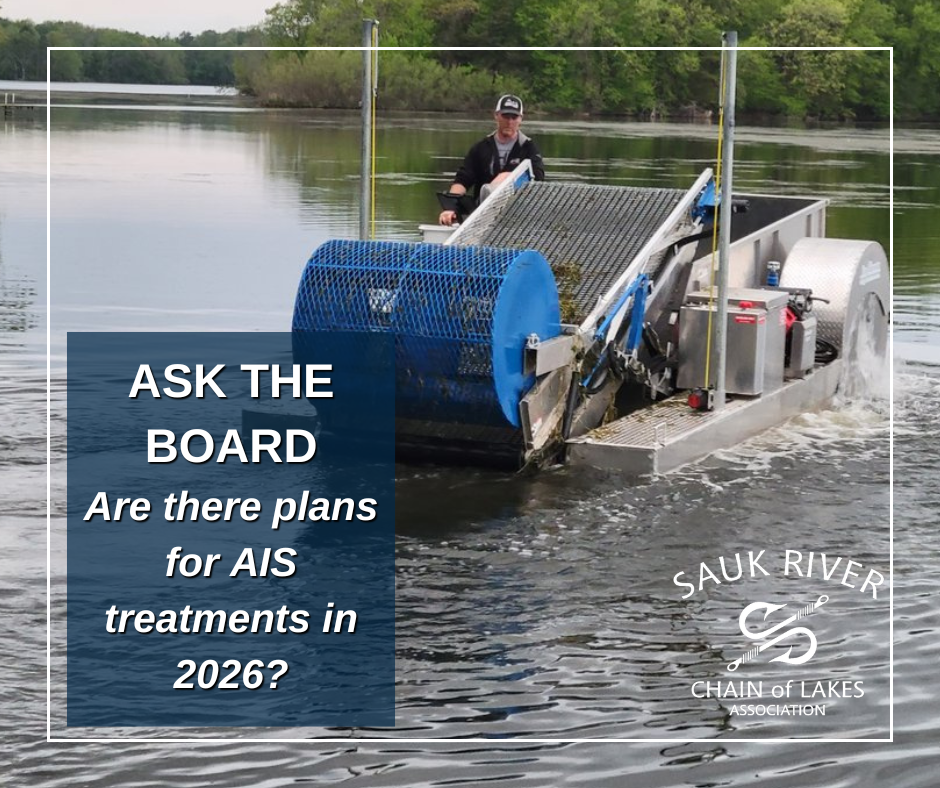
From Richard Gallea, SRCLA President: We've actually treated as much of the Chain as we're allowed to for many years. But we're constrained by the DNR's permitting process, which strictly regulates where we can treat, how much, and with what chemicals. To obtain permits, we engage professional contractors to survey the Chain by boat, documenting via GPS what species they found and where. The treatment locations and chemicals applied vary each year depending on what the surveys tell us about a given year's "crop". We budget enough money to get that done, however often it makes sense to.
But even if we document undesirable weeds in various locations, there are stringent limits that affect the permits we receive. Overall, DNR policy prohibits treating more than 15% of the surface area of any body of water. And generally, we can't treat within 150 feet of shore, as it’s up to individual shoreline owners to manage that area (again, by DNR policy).
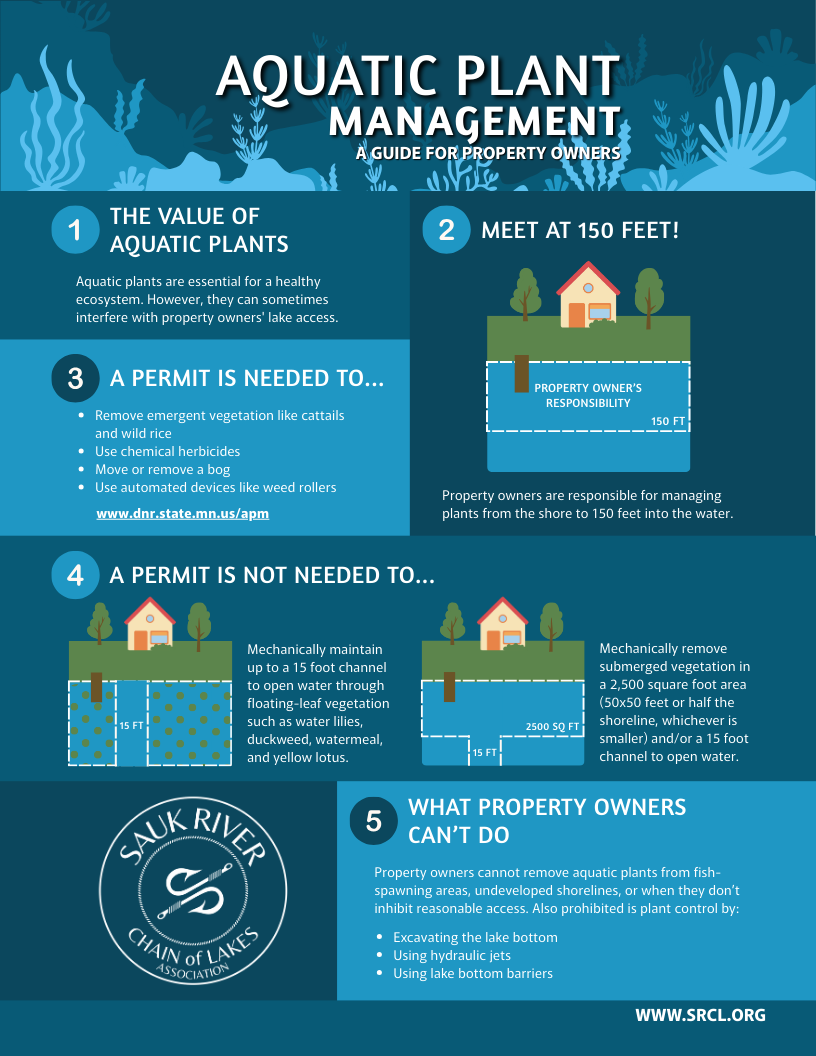
We recently worked out an exception to the 150' rule by negotiating with the DNR to allow us to open up weed-clogged 'channels' that are preventing boaters from accessing the main parts of the Chain. These permits are easier to obtain and will even cover non-invasive native species (like coontail) if they impede access.
Chemical treatments are not allowed on Becker as it's designated as an Environmental lake, so our only option for control there is via mechanical harvesting, which we do on Becker and selectively on other lakes, as well.
And finally, the effectiveness of treatments can vary year by year due to a variety of factors, such as low/no snow and ice cover the previous winter, fueling the perception that the weed treatments in some years are more effective than others.
We post maps of treatment areas on our website, so you can monitor a given year's treatment plan that way. AND this is a reminder that NOW is the time to apply for your own 2026 shoreline weed treatment permits—don’t wait until spring! Getting your permit early ensures you’ll be ready to tackle aquatic weeds and maintain access when the season starts. Early applications help avoid delays and ensure a smooth treatment process.
💻 Learn more: https://www.srcl.org/chainlinksp24/battling?rq=weeds
Thanks for the great question! Keep them coming!