Wake Safe and Research into Impact of Powerboats
Wake Safe and Research into Impact of Powerboats
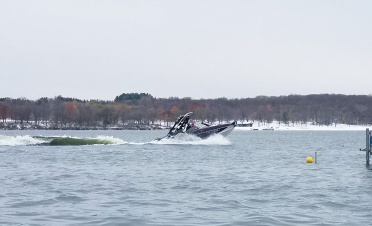
We have previously shared the results of a study by the St. Anthony Falls Lab at the U of M that documented the damage rapid acceleration and large wakes cause to shorelines and lake beds. One outcome of this research is a recommendation that wake boats limit their operation to depths greater than 20 feet and at least 500 feet from shore (nearly two football fields in length, if that's easier to visualize).
Our partners at Minnesota Lakes and Rivers (MLR) are offering to make maps for lake associations that depict the areas of a given lake that meet those two criteria. In the hopes of creating a map for the Chain lakes, we analyzed lake depths and concluded that there are effectively no areas on the Chain that meet the criteria.
While we support all on-the-water activities that the Chain enables, if you choose to create big wakes for surfing or skiing, please bear in mind the recommended minimum depths and distances to minimize the disruption of settled nutrients on the lake beds and damage to our shorelines.
* Wake surfing at least 500 feet from shore to reduce the wave energy impact on shorelines to the same level as a non-wake surf watercraft. Phase I Research: https://cse.umn.edu/safl/news/umn-researchers-study-waves-created-recreational-boats
* Operating in water depths of at least 20 feet to minimize subsurface ecological impact. Phase II Research: https://sites.google.com/umn.edu/healthywatersinitiative/phase-ii-research)
Lets keep loons coming back!
Lets keep loons coming back!
Be a lake steward! It’s easy and there’s help. This shoreline series is a project with Minnesota Lakes and Rivers Advocates. Go here to learn more about the Sauk River Chain of Lakes Association's Lake Steward initiatives.
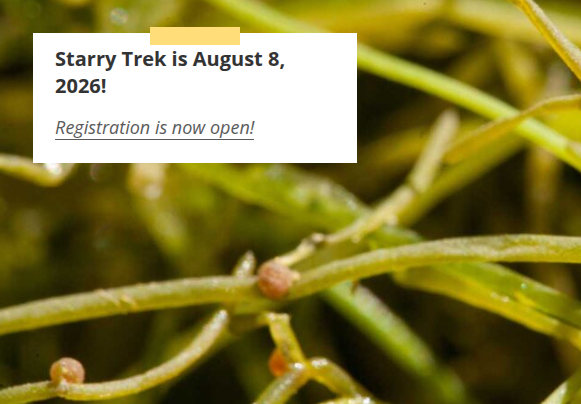
Starry Trek is August 8!
Starry Trek is August 8!
Stearns COLA will again sponsor Starry Trek this year on August 8th beginning at 8:30 AM in Cold Spring at the Blue Heron parking lot on MN Highway 23. Starry Trek has successfully been able to find the presence of Starry Stonewort in Grand Lake, Carnelian Lake, and Two Rivers Lake resulting in successful containment within the discovered areas. Early discovery is of prime importance in keeping Starry from taking control of the infestation. We need as many lakes in Stearns County as possible to volunteer and learn how to spot Starry Stonewort in each Stearns County lake. We will inspect up to 25 lakes again this year and it would be great to have representatives from as many of these lakes as possible.
PLEASE SIGN UP TODAY AND HELP STOP THE SPREAD OF AIS IN STEARNS COUNTY. https://maisrc.umn.edu/starrytrek
Jim Meinz will again lead the effort this year and if you have any questions feel free to email at jmeinz1@gmail.com, or call him at 320 249 3996.
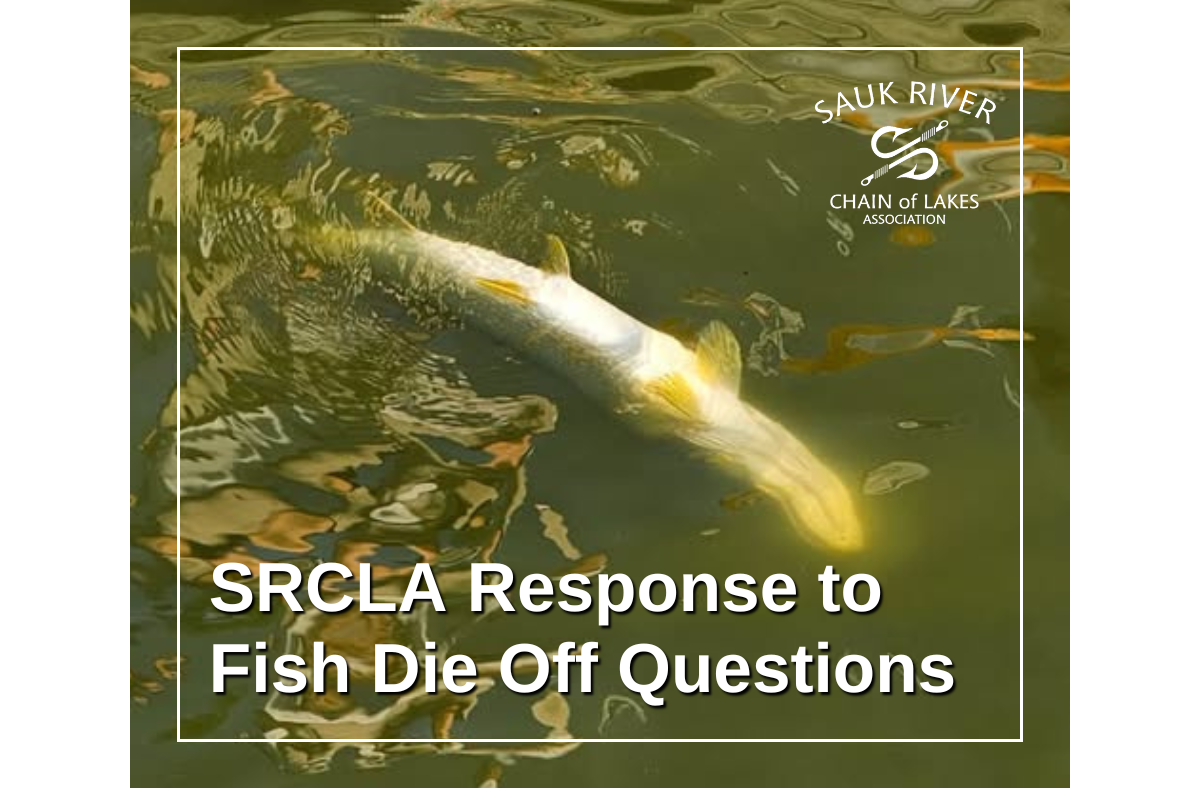
Response to Reports of Fish Die Off
SRCLA Response to Fish Die Off
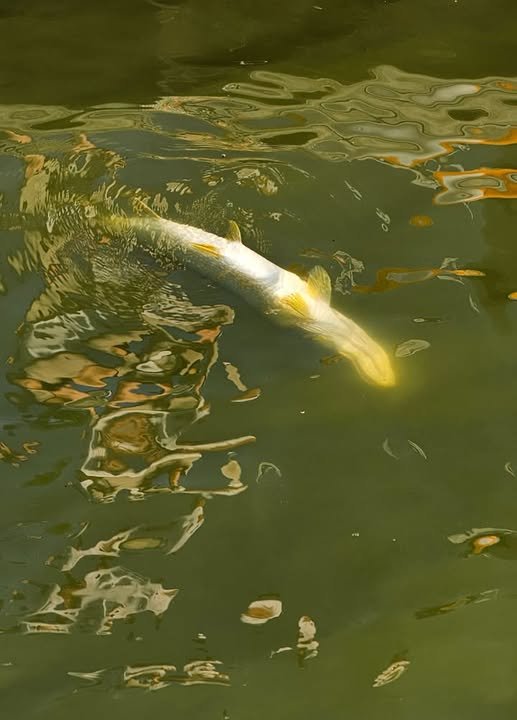
Recently we have been aware of unusually large fish die-offs on the Chain. A big thank you to everyone for reaching out to us and reporting information on these die-offs. According to the DNR, it is not surprising there is more die-off this year with the extremely long stretch of hot weather we have been experiencing. And it probably won’t get better any time soon. The DNR will not send anyone out to test any dead fish and no action will be taken, as this is considered a normal phenomenon. The majority of the fish kill appears to be northern pike and catfish.
WHY IS THIS HAPPENING? Jon Folkedahl is our Water Quality lead, and he and his team collect water samples monthly for lab analysis from six of the Chain lakes, concurrently measuring dissolved oxygen (DO) and temps at eight locations. Last Wednesday, July 15, was the latest sampling event. He noted that there were a variety of DO conditions across the Chain. Water temps at one meter depth were quite consistent at 85 degrees throughout. The DO levels did vary but most of the lakes had survivable DO levels down to around 6 - 8 feet of depth. A few locations held oxygen levels above 2 ppm all the way to the bottom, even in deeper locations in excess of 30 feet. Some lakes were well stratified, with DO levels and temps falling steadily from top to bottom. Schneider Lake, for example, lost oxygen and heat rapidly and steadily with depth, falling to zero oxygen by about the 15 - 20 foot depth and temps in the 40s as the probe neared the bottom around 33 feet. The riverine lakes, however, were well mixed with respect to both temp and dissolved oxygen, top to bottom above 2 ppm dissolved oxygen. Knaus and Krays - as usual - held the most oxygen of all the Chain lakes, yet their overall depths where we sample are 5 - 6 feet.
The Chain is a super complex system and a lot of factors come into play. Northern pike can withstand more stress and lower oxygen levels than most fish in Minnesota lakes. They can tolerate long term oxygen levels as low as 2 ppm or even lower. Same with catfish. Other Minnesota game fish are less tolerant of low oxygen, such as walleye and panfish. Therefore it seems unlikely that the northern pike and catfish would be the first to die strictly due to low oxygen levels. We are guessing - and again this is just a guess - that people fishing tend to keep the walleyes and the larger panfish, while releasing the northerns and catfish. Catch and release does stress all fish, and with lake water conditions being less than optimal, some of the northerns and catfish that get released just can't recover.
WHAT CAN I DO TO HELP? There are two musky fishing leagues in Minnesota. They fish on Wednesdays and both leagues suspend operations when water temps hit 80 degrees as muskies do not fare well in hot temps and low dissolved oxygen levels, and the stress of catching them (as they are fierce battlers) and releasing is often a death sentence. This year they suspended the league the week of July 6th and do not anticipate opening the league again until mid-to-late August.
In that spirit we would like to ask the fishing community to exercise care and caution should you choose to fish while these conditions persist.
Back to the muskies; the DNR would like people to be alert for any dead muskies they see and if they have tags they would like to know the tag numbers. You can communicate that on our Facebook page, directly to the SRCLA board and/or to the DNR (joe.stewig@state.mn.us).
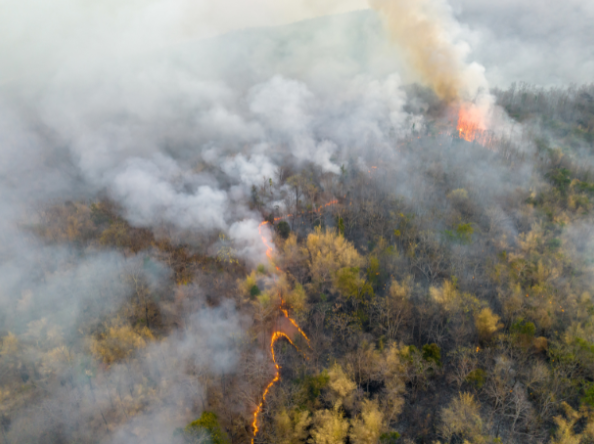
Minimize Fire Risk
Minimize Fire Risk
We’re not currently experiencing wildfires here, but we certainly are experiencing the smoke! 💨 This article includes helpful hints to help minimize the risk of losing your lake property to fire.
With active fires nearby, protecting our wooded cabins and homes is critical. Here are quick, actionable steps from Minnesota Lakes & Rivers Advocates to safeguard your property: https://mnlakesandrivers.org/firewise/
🌳 Land Defense
Whack & Stack: Thin out smaller balsam fir and spruce to prevent ground fires from climbing into the treetops.
Create Space: Keep a 10-foot gap between evergreen tree crowns, and clear vegetation 30 feet out from structures.
🏡 Structure Defense
Clear Tinder: Rake leaves/dead grass 30 feet away, and remove firewood stored under your deck.
Block Embers: Make sure all roof vents are screened.
Roof Sprinklers: Consider a gas-powered lake pump system to protect your roof if you have to evacuate.
Check out the full article for more steps on fire safety! 🌲👇
#Firewise #LakeLife #MinnesotaLakes #WildfireSafety #CabinLife
2026 Program Update: Aquatic Vegetation Management
2026 Program Update: Aquatic Vegetation Management
This spring, SRCLA continued its commitment to protecting and improving the Sauk River Chain of Lakes through a coordinated aquatic vegetation management program. All of the documentation can be found on the updated Current Projects page.
Using early-season aquatic plant surveys, priority Curlyleaf Pondweed (CLP) infestations were identified and treated with aquatic herbicides across 114.9 acres on Little Cedar Island, East, Knaus, Krays and Zumwalde Lakes. In addition, 45 acres of mechanical harvesting were completed on Becker, Great Northern and Long Lakes to improve navigation and manage localized nuisance aquatic vegetation.
This year’s program reflects a coordinated approach that combines comprehensive aquatic vegetation surveys, targeted management, ongoing monitoring, and long-term planning to support informed decision-making across the Chain.
This work is guided by AKA Collaborative, bringing together a team of experienced partners to support every phase of the program—from aquatic vegetation surveys and treatment planning to pesticide applications, mechanical harvesting and long-term strategy. Thank you to Endangered Resource Services (ERS) for conducting extensive aquatic vegetation surveys and providing the data that guide management decisions, AquaTerra Solutions (ATS) and Professional Lake & Land Management (PLM) for aquatic pesticide applications, and Weeds Up for mechanical harvesting.
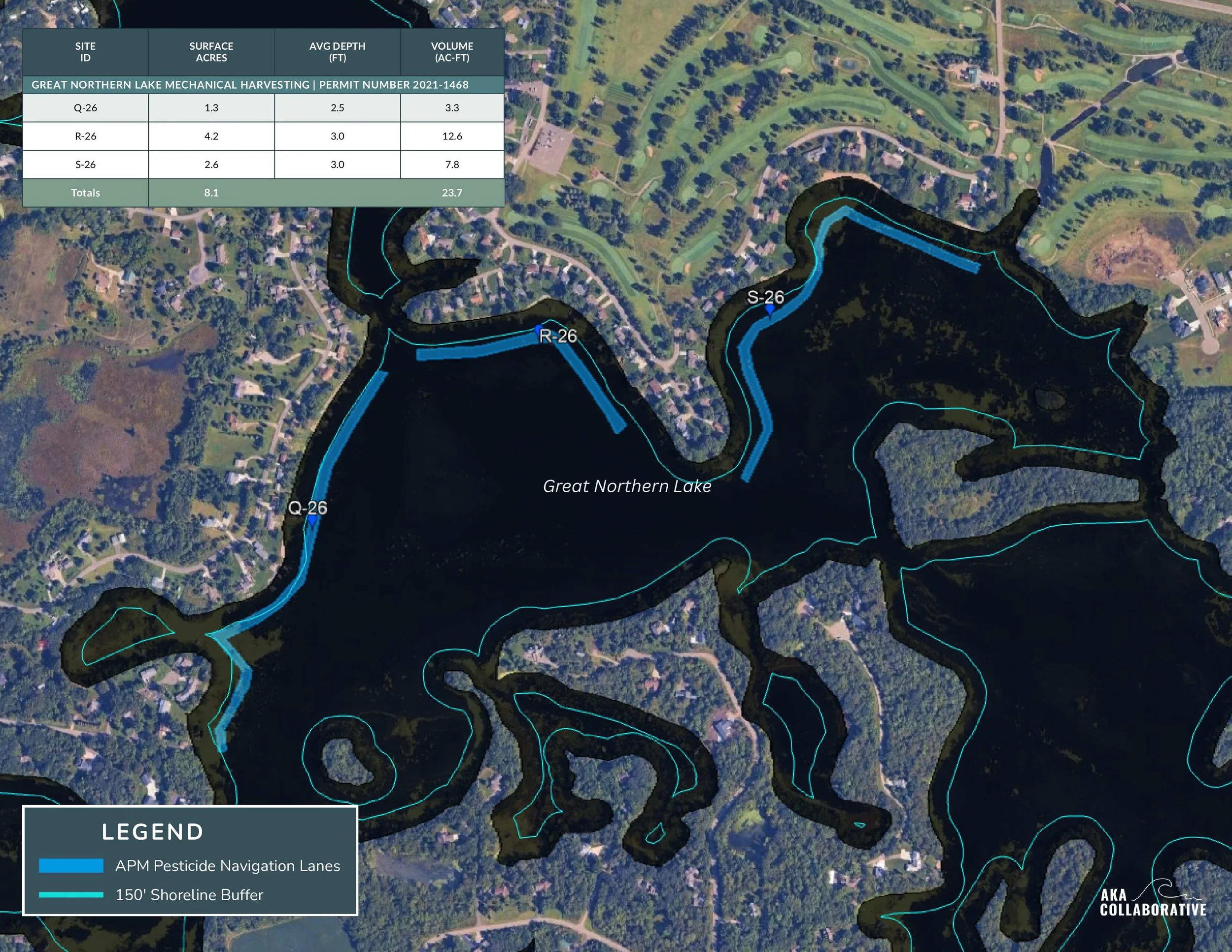
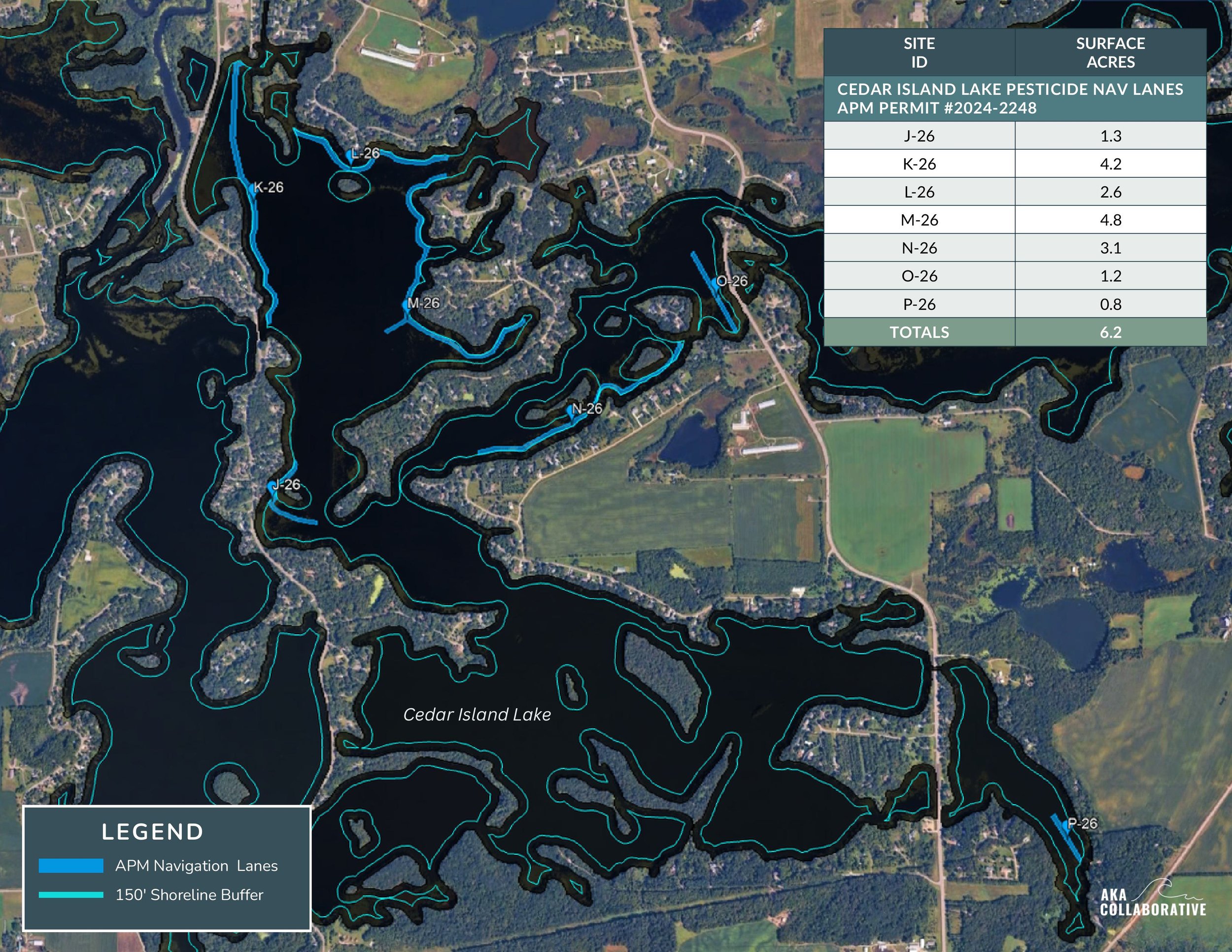
In addition to the CLP treatments completed in May, aquatic plant management (APM) permits were approved for navigational access lanes on Great Northern and Cedar Island Lakes. Those treatments were completed by AquaTerra Solutions at the end of June. Additional navigational lanes may be permitted later this summer if nuisance vegetation creates access limitations beyond the 150-foot shoreline zone.
We’re excited to share that preliminary post-treatment survey results show excellent CLP control throughout all treated areas. Additional peak growing season surveys will be conducted in August to evaluate native aquatic plant communities, map invasive milfoil, monitor for emerging aquatic invasive species, and continue guiding future management decisions.
Over the coming weeks, we’ll continue sharing survey results, treatment maps, field photos, and additional updates highlighting this year’s work. Thank you to everyone who continues to support SRCLA’s efforts to protect and enhance the Sauk River Chain of Lakes!
Reducing Lawn Fertilizer and Planting Native Shorelines Helps Stop Algae Blooms
Reducing Lawn Fertilizer and Planting Native Shorelines Helps Stop Algae Blooms
Natural Shorelines help our lakes' water quality, wildlife, and pollinators. Learn how you can become a Lake Steward and join others across Minnesota in helping to keep our lakes healthy and beautiful.
This shoreline series is a project with Minnesota Lakes and Rivers Advocates. Go here to learn more about the Sauk River Chain of Lakes Association's Lake Steward initiatives.
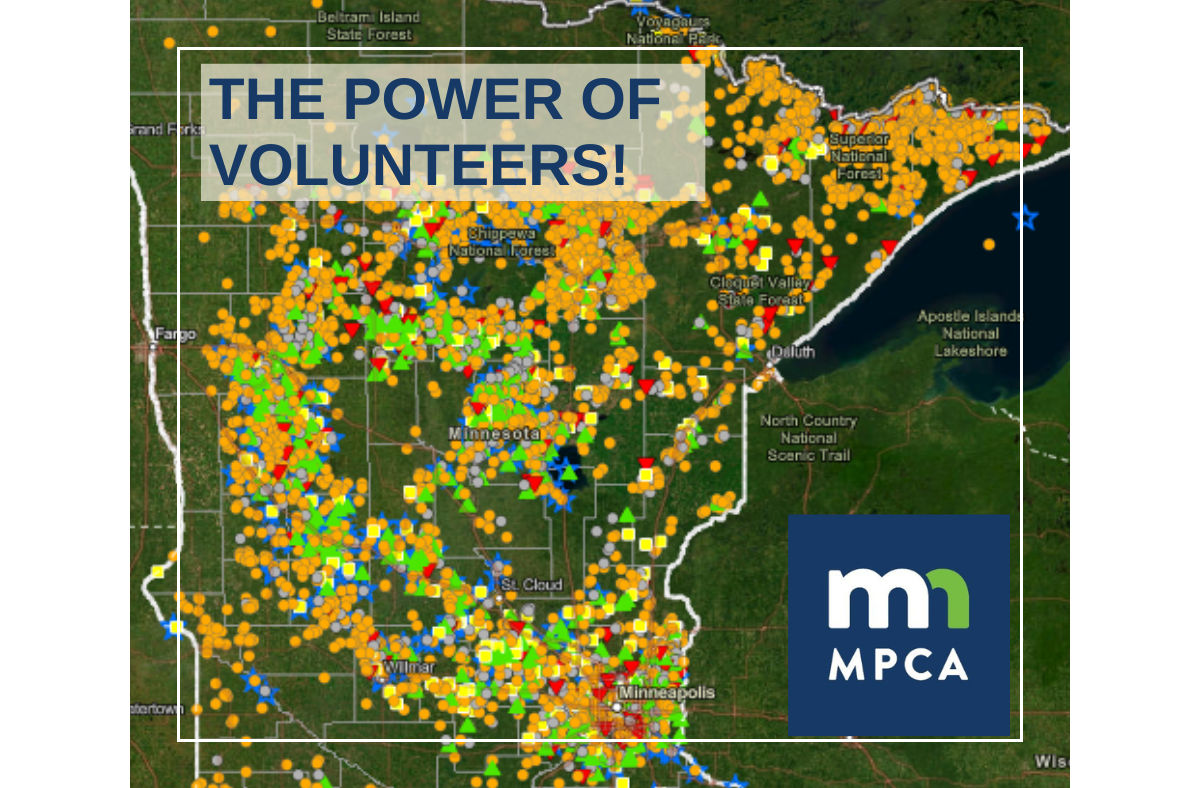
The power of Volunteers!
The power of Volunteers!
The power of volunteer-collected data is on full display in these state-wide online maps! An army of volunteers across the state collects data so that that we can learn about the health of our state's waters. https://experience.arcgis.com/experience/7be28eb70b354e4d92e47fd14ab405df
Click on any lake displayed on the map to see the results of the most recently water clarity trend analysis. Trends use all historical data per stream site or across a full lake to determine if water clarity is increasing, decreasing or staying the same. Not all lake or stream sites have enough data to determine if a trend is present.
If you want to learn more about volunteering to monitor your lake, go to https://www.pca.state.mn.us/get-engaged/volunteer-water-monitoring
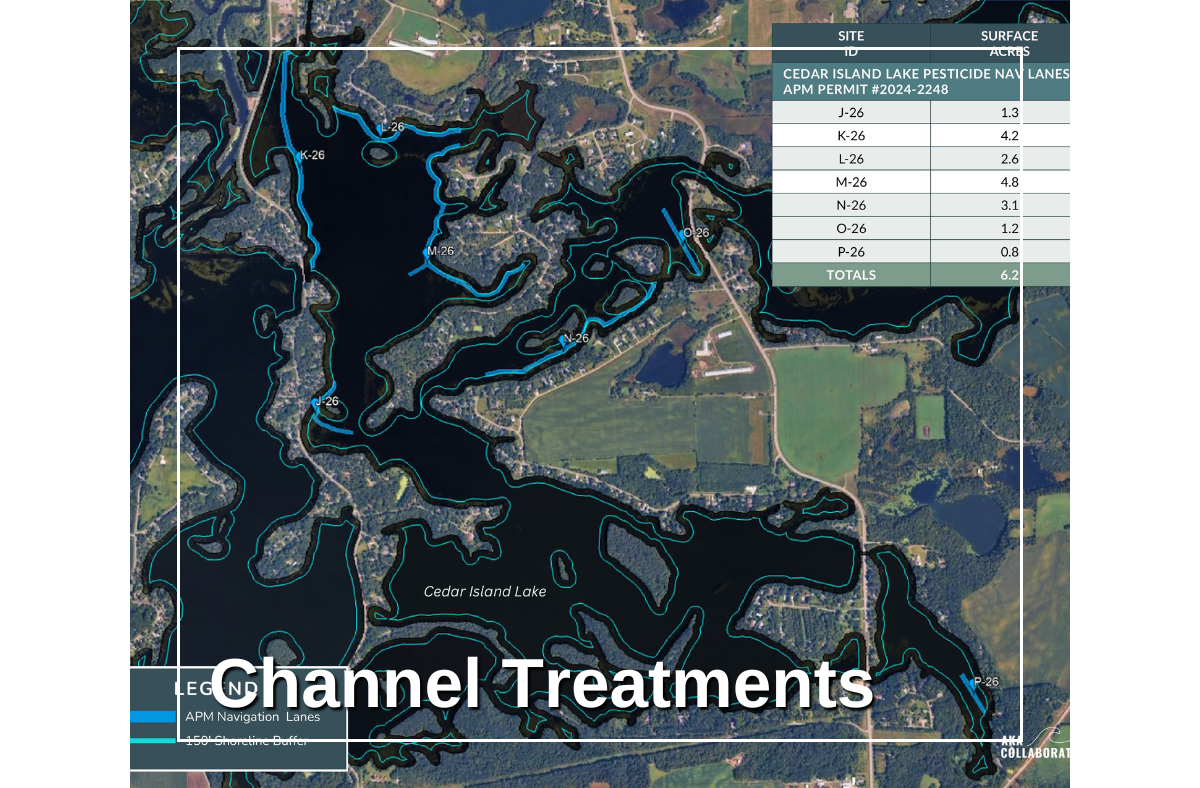
Channel Treatments
Channel Treatments
The SRCLA received permits to create navigation channels on four lakes. These permits cover both invasive and native weeds, and are intended to provide access to the main parts of the Chain. Great Northern was treated on Thursday, June 25th and the other lakes on Friday, June 26th.
NOTE: The DNR considers five lakes to be part of Cedar Island Lake, which is why one of the two maps below is labeled as it is. Most of the treatments on the 26th took place on Koetter and East Lakes.
Youth Boat Training
Youth Boat Training
Stearns COLA and the Stearns County Sheriff’s Water Patrol is pleased to announce youth boat training dates for this summer. Classes are for youths 12 to 18 years old. The classes include both classroom and on-boat training. Students will take the approved DNR boat permit test and upon successful completion they will receive their operators permit. Pizza and refreshments will be provided by the Stearns COLA.
The 2026 class at Shady's is FULL.
You can complete a certification witn the DNR’s online course: https://www.dnr.state.mn.us/safety/boatwater/education.html.
What's in our water?
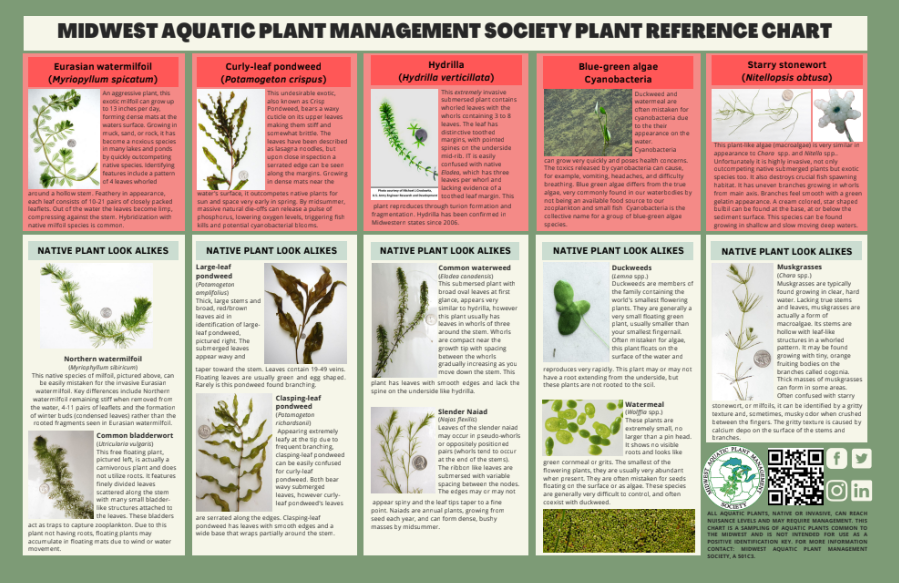
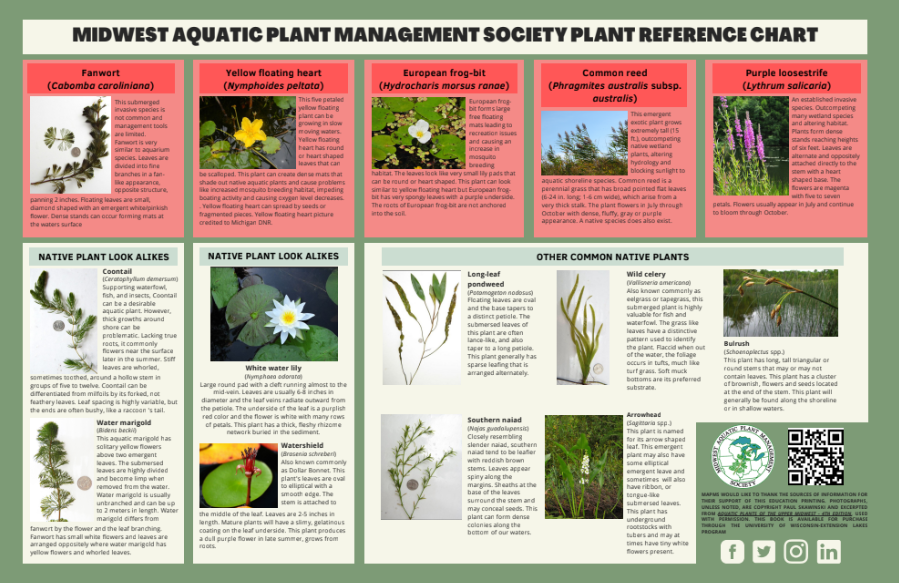
AIS Reference Chart
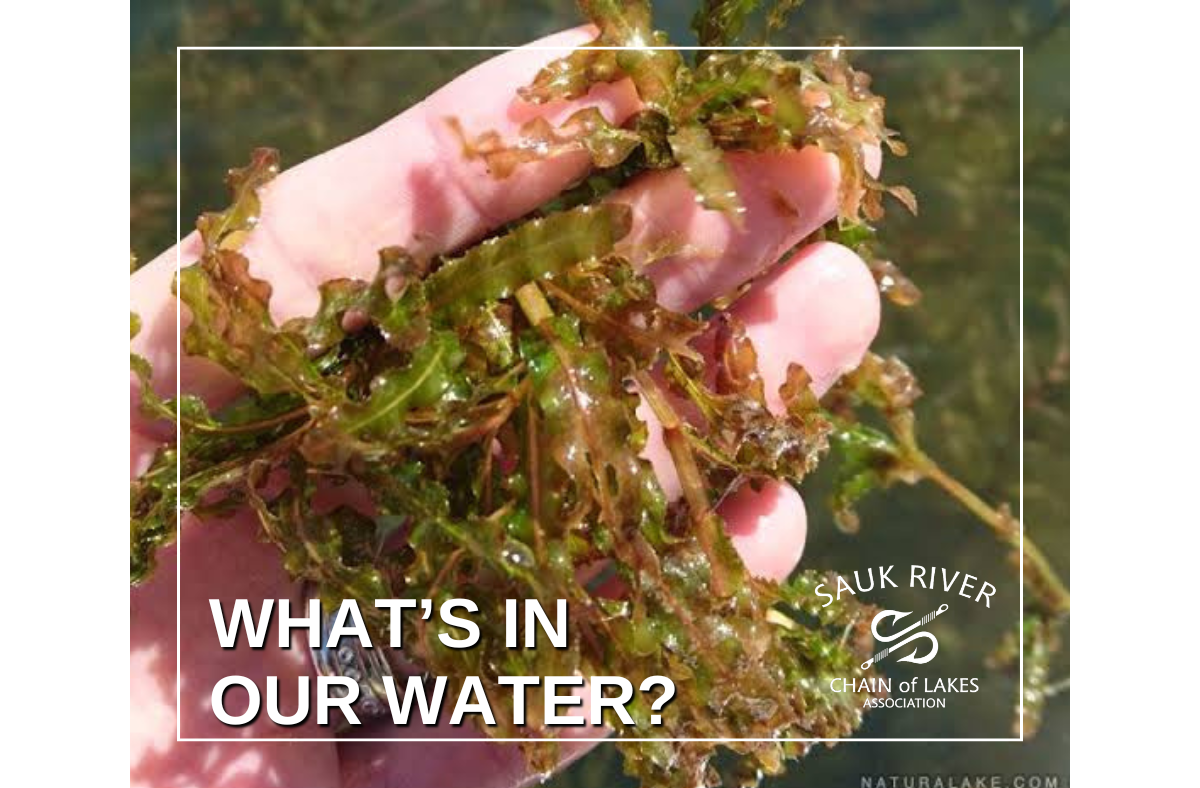
As shared by Amy Kay at the 2026 Annual Meeting, one of the first steps to developing a Lake Management Framework is understanding what is in our water. Of particular interest to the Chain are Culy Leaf Pondweed (CLP) and Hybrid Watermilfoil (HWM), both invasive. This helpful chart was handed out at the meeting, click here to download the PDF.

Beer & Blooms
2026 Beer & Blooms
Join the Sauk River Watershed District on July 9 for a tour of great gardens in the Cold Spring area! Featured will be anything from perennial gardens to shoreline restoration. Tour stops include both public and private property. Group meets at the school’s DEF Building parking lot, caravan from location to location, and end our tour at Third Street Brew house. There will then be a presentation on perennial planting. Participants will receive handouts, brochures, and a chance to win prizes!
Register through ROCORI Community Education HERE.
Appetizers are included, and a cash bar will be available!
Questions? Contact Kory @ kory@srwdmn.org.


ILIDS Upgrade
ILIDS Upgrade on 22 Launch
As mentioned by Steve Weeres at the 2026 Annual Meeting, the Association recently upgraded the ILIDS system at the Highway 22 boat landing to provide enhanced capability for inspecting boats as they enter and leave the area SRCLA owns and manages four I-LIDS (Internet Landing Installed Device Sensor). These units provide both visual and audio awareness of the need to prevent the spread of AIS. Head on over to to srcl.org under Lake Mgmt Programs to view the dedicated ILDS page and learn more about how these self-contained, solar powered systems installed at boat launches help prevent the spread of AIS through video capture and remote inspection of boats and trailers entering the water.
Curlyleaf Pondweed Harvest 6/12/26
Curlyleaf Pondweed harvesting 6/12/26
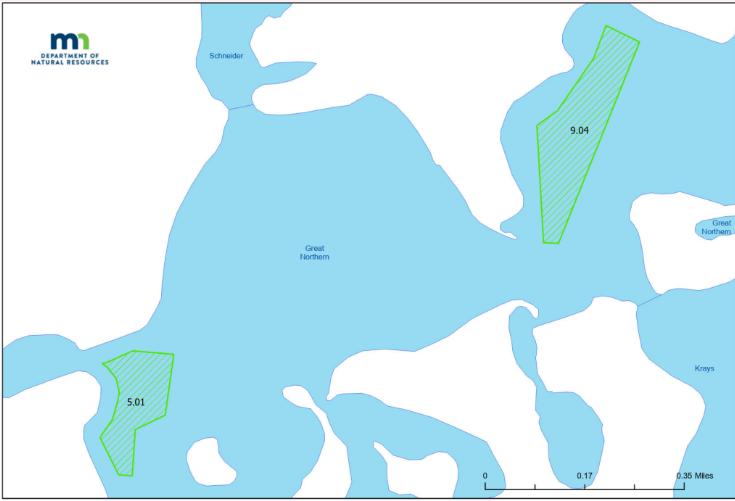
The DNR issued aquatic plant management permits to harvest CLP in the areas shown in the map below. Harvesting was completed on June 12. The SRCLA is pursuing additional permits for other areas across the Chain as well. Stay tuned!
Annual Meeting Summary
Highlights from the 2026 Annual Meeting
Thank you to everyone that attended the SCRLA Annual Meeting yesterday! We had a great turnout with over 90 people in attendance, in addition to our special guests:
Jeff Bertram, Stearns County Commissioner, District 3
Amy Kay, Principal Steward, AKA Collaborative
Abi Borgerding & Kory Klebe, Sauk River Watershed District
John Schmitz & Randy Schackmann, Richmond Fire Department (on behalf of Catfish Fest)
After thanking all of our volunteers that work so hard with charitable gambling, water sampling and roadside cleanup, SRCLA president Richard Gallea reviewed some of the highlights over the past year. WOW! A lot of great work has been done!
Treasurer Jeremy Schnieder presented a financial overview. The full report is here.
Richard then introduced Amy Kay of AKA Collaborative, who led us through a great presentation of how AKA has been working with the AIS team to develop a Lake Management Framework, "Managing for Today, Planning for Tomorrow'. Really great work has already been done, and there is much more to come! Her presentation can be found here. Thank you all for your thoughtful questions and your passion for maintaining the integrity of our Chain.
Richard then moved on to the formal board member election process, first thanking the outgoing members who are rolling off the board: Candy Burns, Brenda Herubin and Steve Reid. We thank them for their years of dedication and tireless work! Richard then introduced three new candidates, Mike Hidding, Dylan McIntosh and Earl Von Ende. Since there were six open spots and six candidates (three incumbents, three new), a motion was made to accept the six candidates, the motion was seconded, and all present voted 'AYE'.
Once the election was complete, Richard opened the floor for additional questions. There was a question about the feasibility study to replace the Cold Spring dam with rock arched rapids. Indeed the study is going forward, funded by state monies. There was a discussion about stopping the phosphorus from getting into the Chain, with a great response from our partners at the Sauk River Watershed District about ongoing efforts within the watershed, as well as what individual shoreline owners can do to prevent phosphorus from draining into their own shoreline.
After a motion to adjourn, the motion was seconded, and we closed the 2026 Annual Member meeting. Seven people took the opportunity to buy a 2026 membership. Have you ordered yours yet? https://www.srcl.org/become-a-member
Curlyleaf Pondweed Treatments 5/20/26
Curlyleaf Pondweed treatments 5/20/26
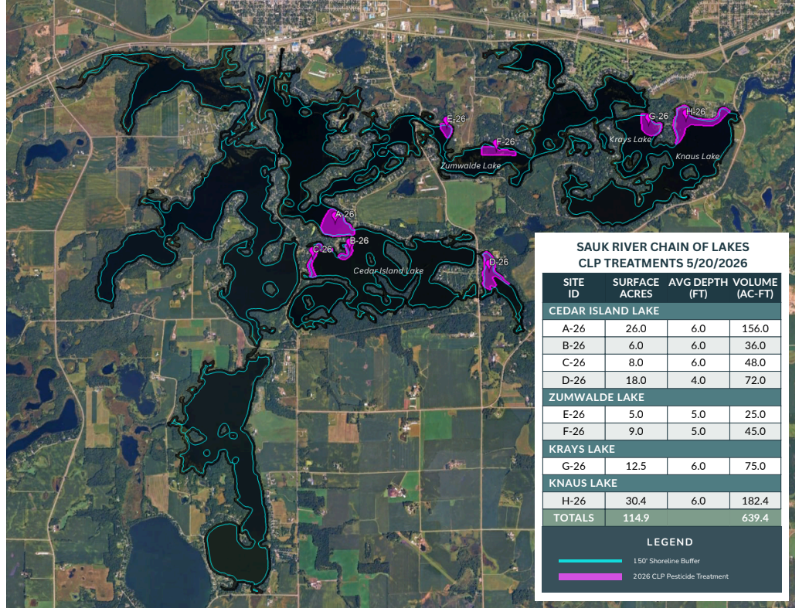
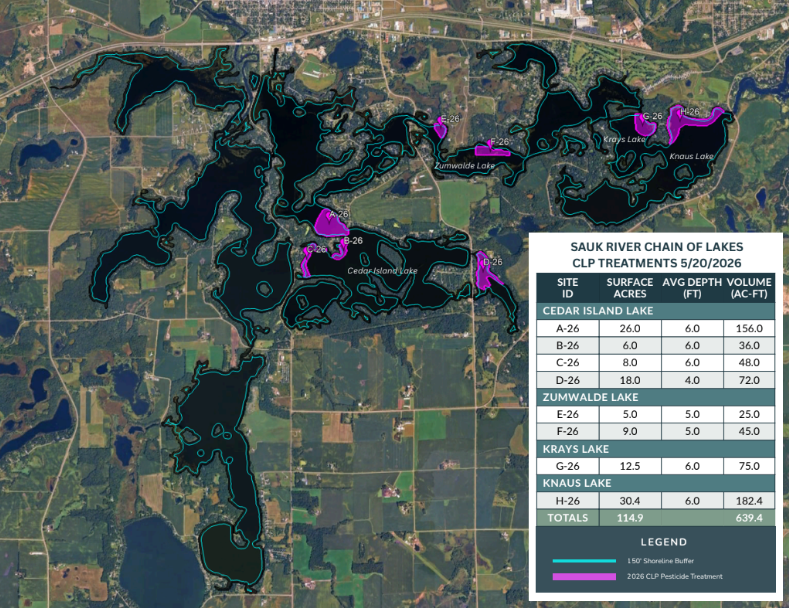
On May 20, 2026, aquatic invasive species management activities were conducted on the Sauk River Chain of Lakes targeting Curlyleaf Pondweed (CLP), an invasive aquatic plant known to impact native plant communities, recreation, and overall lake health.
Approximately 115 acres of permitted management areas were treated across Cedar Island, Zumwalde, Krays, and Knaus Lakes. Applications of Flumigard® SC (flumioxazin) were performed by Minnesota-licensed aquatic pesticide applicators from AquaTerra Solutions and PLM Lake & Land Management in accordance with Minnesota DNR permit requirements, product label directions, and all applicable state regulations.
Weather and water conditions on the treatment day were favorable for application, supporting effective product distribution within the targeted management areas. These treatments are part of the Sauk River Chain of Lakes Association's ongoing efforts to manage aquatic invasive species, protect recreational use, and support the long-term ecological health of the chain. For detailed maps of each lake treated click here.
Take a Kid Fishing Weekend
Take a Kid Fishing!
On Take a Kid Fishing Weekend Minnesotans can fish without licenses if they take children 15 or younger fishing.
Minnesotans 15 and younger don’t need fishing licenses any time of the year. Take a Kid Fishing Weekend is a way for adults and kids to fish together without the step of buying a license.

For everyone’s sake, Own Your Wake!
Mind Your Wake!
As we officially enter the summer lake season, it’s crucial to be mindful of your wake. Every boat creates a wake, and being considerate of how it impacts other boaters and the shoreline is essential. Plus, minding your wake is key to keeping people safe while on the water. Here are some tips to help you navigate responsibly:
🚤 Be aware of your environment — look out for swimmers, other boaters, no-wake zones, etc. to prevent injuring other water-goers. For a map of the no-wake zones on the Chain, go to Our Lakes.
🚤 Per the DNR, stay at least 200 feet away from shoreline, docks, and other structures to prevent damages and shoreline erosion . On our Chain, this means being extra cautious in the channels and around corners.
🚤 Minimize repetitive passes — once you’ve run a line, move onto another area.
🚤 Respect the rights of others to enjoy their time on the water!
By taking these tips to heart, you can help keep Minnesota’s waters safe and fun for all! For more details, head to https://www.dnr.state.mn.us/.../boatwater/own-your-wake.html.
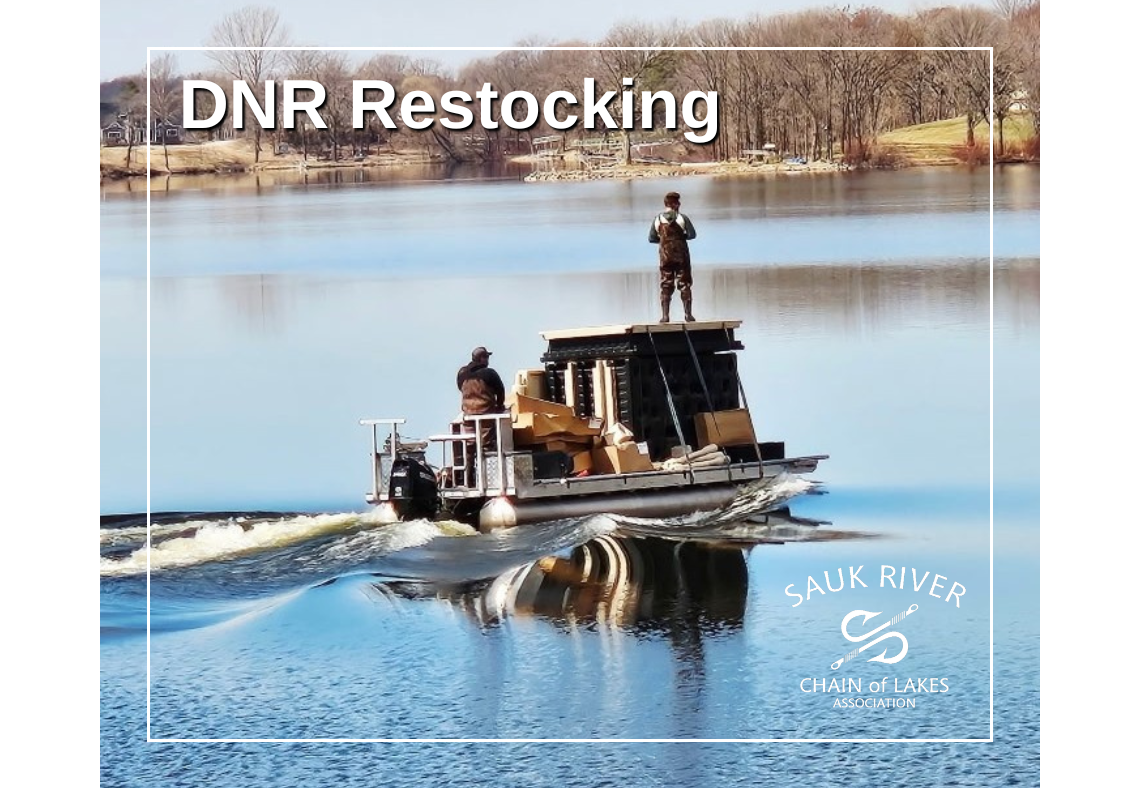
DNR Restocking
DNR Restocking
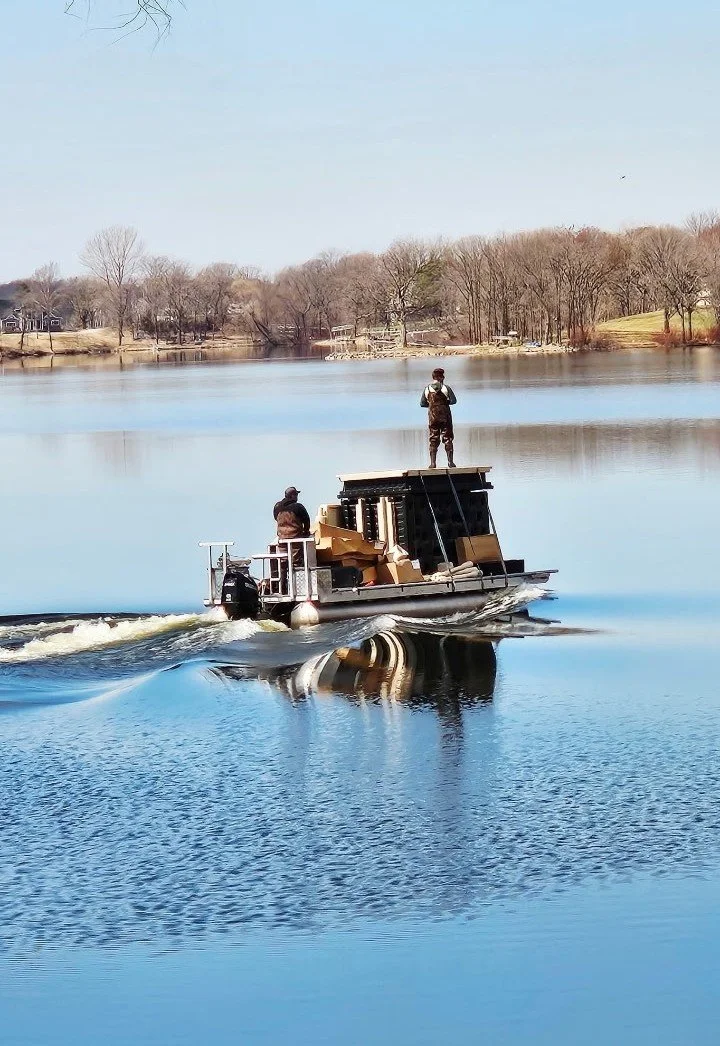
The DNR stocked the Lower Mississippi strain of walleye fry into two lakes. 137,500 were put into Horseshoe and 377,500 into Cedar Island. This is the first time stocking has been done on the Chain since 2016. For more details, read Steve Reid's article in the 2026 Spring Chain Link.
Great news for our lakes!
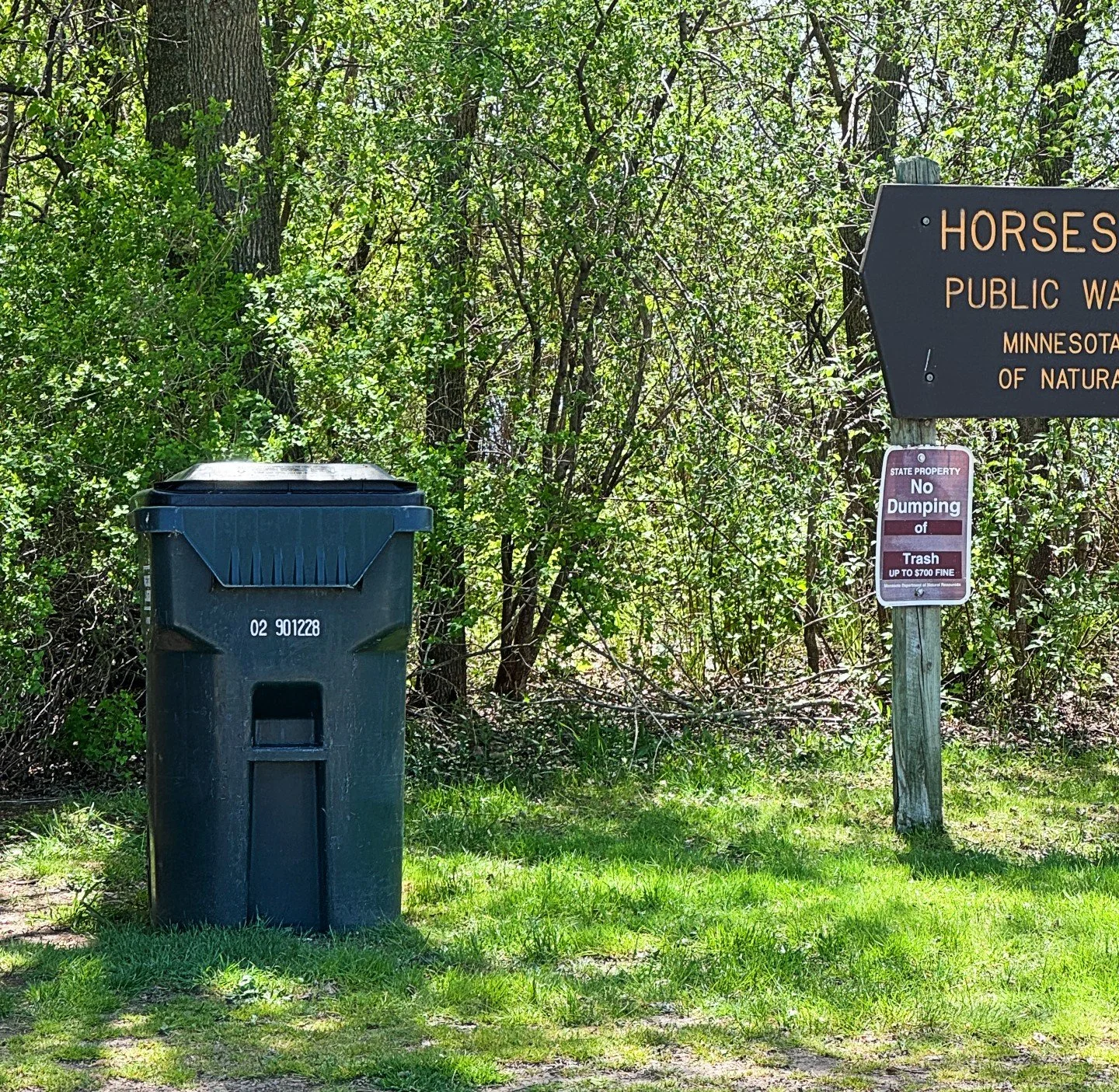
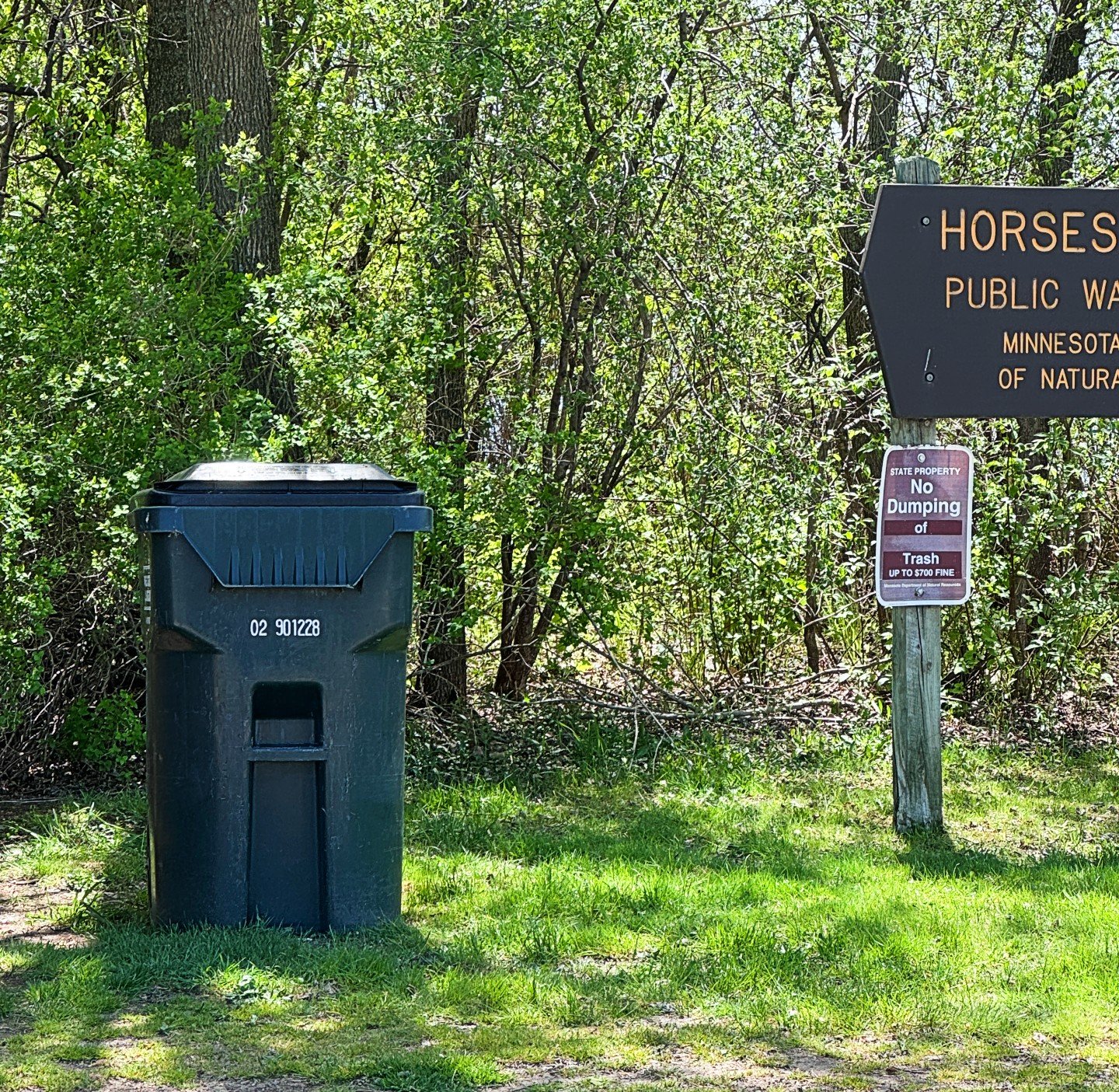
Trash carts have been installed at three of the landings!
Trash carts have been installed at the three DNR-owned landings!
Thanks to a major advocacy effort behind the scenes, keeping our shorelines clean just got a lot easier. A massive shoutout and thank you to SRCLA board member Steve Weeres and Stearns County Commissioner Jeff Bertram for working hard together to secure these carts for our community boat launches. Carts have been installed at Co. Rd. 71, MN-22 and Long Lake landings (the Hwy 23 landing is owned by Cold Spring and under their care).
Let's keep this momentum going and protect our waters:
🗑️ Use the carts: Empty your boat trash directly into the new bins before heading home.
🛑 Secure your loads: Ensure no loose garbage flies out of your vehicle or boat at the landing.
🌿 Clean, Drain, Dry: Keep doing your part to stop the spread of aquatic invasive species!
Next time you see Steve or Commissioner Bertram, please give them a big thank you for protecting our lakes!